Table of Contents
- What Happens When You Mix Benzos and Alcohol?
- Why Is Mixing Benzodiazepines and Alcohol So Dangerous?
- How Long After Taking A Benzodiazepine Can You Drink Alcohol?
- Common Benzodiazepines That Should Never Be Mixed With Alcohol
- Signs of a Benzo and Alcohol Overdose
- Long-Term Effects of Mixing Benzos and Alcohol
- Why People Mix Benzos and Alcohol
- Treatment for Benzo and Alcohol Addiction in California
- Reference
Benzodiazepines are among the most commonly prescribed medications in the United States, used to treat anxiety, panic disorders, seizures, and insomnia. Alcohol, meanwhile, is the most widely used recreational substance in the country, and alcohol use disorder affects millions of Americans each year. On their own, both carry risks when misused. Combined, they become one of the most dangerous drug interactions a person can have.
Mixing benzos and alcohol depresses the central nervous system to a degree that neither substance produces alone, and this combination sends thousands of people to emergency rooms every year.
If you or someone you love is combining benzos and alcohol, understanding exactly what happens in the body, and why it’s so risky is the first step toward getting help.

What Happens When You Mix Benzos and Alcohol?
Benzodiazepines and alcohol are depressants of the central nervous system. They act in the brain via overlapping pathways, primarily by amplifying the effects of GABA, the neurotransmitter that slows brain activity.Each drug alone produces sedation, muscle relaxation and respiratory depression to varying degrees. Mixing benzos and alcohol isn’t just about effects adding up, it’s about them multiplying.
This is known as a synergistic, or potentiating effect. An amount of alcohol or a benzodiazepine that is safe by itself can be dangerous if taken together.
Combining benzos with alcohol can lead to extreme drowsiness, confusion, loss of coordination, blackouts and dangerously slow breathing. In severe cases this combination may result in loss of consciousness, coma or death.

Why Is Mixing Benzodiazepines and Alcohol So Dangerous?
The risk of combining alcohol and benzodiazepines isn’t just that you might feel “extra sedated.” There are a number of separate biological mechanisms that make this combination especially high risk.
Clinical Pharmacology of Compounded Respiratory Depression
Both suppress the respiratory drive from the brain stem. Together, breathing may slow down to a dangerous rate or stop altogether. Respiratory depression is the #1 cause of death in benzo/alcohol overdose . It can happen even in doses that wouldn’t be fatal alone .
Unstable blood concentration levels
Alcohol affects the rate at which the liver metabolizes benzodiazepines, and vice versa. This can cause levels of benzodiazepines in the bloodstream to rise more quickly than expected, leading to a sedation that lasts longer and is more intense than a person expects when they start drinking.
Impaired Judgment Causes Continued Use
Both substances impair judgment and memory, so someone mixing benzos and alcohol may not know how much of either they’ve already had. This often leads to accidental redosing, which dramatically increases the risk of overdose.
According to research published by the CDC, alcohol is involved in roughly one in five overdose deaths involving benzodiazepines, highlighting the lethal combination.

How Long After Taking A Benzodiazepine Can You Drink Alcohol?
There is no universally “safe” waiting period, because the answer depends on the specific benzodiazepine, the dose, and individual factors like age, liver function, and body weight. Below lets cover the types of benzodiazepine that can affect your health.
- Short-acting benzodiazepines (like Xanax) are typically cleared from the bloodstream within 6 to 12 hours, but their sedative effects can linger even after blood levels drop.
- Long-acting benzodiazepines (like Valium or Klonopin) can remain active in the body for several days, meaning “one drink” days after a dose can still carry risk.
- Individual metabolism varies significantly. Age, liver health, other medications, and even genetics affect how quickly a benzodiazepine clears the system.
Because of this variability, the only truly safe answer is to avoid alcohol entirely while taking a prescribed benzodiazepine, and to talk with a physician before assuming any amount of time makes drinking safe. Doctors and pharmacists routinely advise patients not to drink at all during benzodiazepine treatment, precisely because mixing benzos and alcohol remains risky long after the medication was taken.
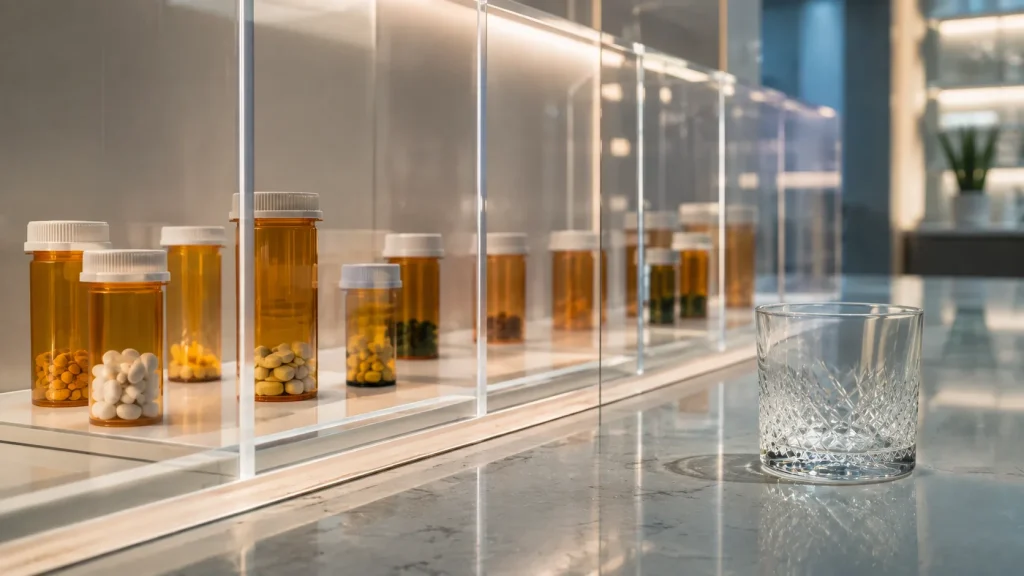
Common Benzodiazepines That Should Never Be Mixed With Alcohol
Benzodiazepines all pose a risk when taken with alcohol, but certain specific ones are more frequently prescribed and misused.
Xanax (Alprazolam)
Xanax is one of the most frequently prescribed benzodiazepines in the U.S., and one of the most commonly involved drugs in overdoses. Its rapid onset means people often feel its effects quickly, but when combined with alcohol it can lead to profound sedation and respiratory depression in a short period of time.
Diazepam (Valium)
Valium is a long-acting benzodiazepine, meaning it stays active in the body much longer than Xanax. A longer presence in the body means the risk window for mixing benzos and alcohol is much wider – even a drink a day or two after a dose can be dangerous.
Klonopin (Clonazepam) and Ativan (Lorazepam)
Both are commonly used for anxiety & seizure disorders. Like other benzodiazepines, they enhance the sedative and respiratory-depressant effects of alcohol, and both have been implicated in fatal overdoses when used in combination with drinking.

Signs of a Benzo and Alcohol Overdose
Recognizing the signs of an overdose can save a life. If you notice any of the following in someone who has combined benzos and alcohol, seek emergency medical help immediately:
- Extreme drowsiness or inability to stay awake
- Slow, shallow, or irregular breathing
- Bluish tint to lips or fingertips
- Confusion or slurred speech
- Loss of coordination
- Vomiting while unconscious or semi-conscious
- Unresponsiveness or loss of consciousness
An overdose involving alcohol and benzodiazepines is a medical emergency. Do not wait to see if symptoms. Call 911 and, if possible, stay with the person and keep them on their side to prevent choking if they vomit.
Surviving an overdose is often the moment that makes clear how urgently a structured alcohol detox program is needed to prevent it from happening again.
Long-Term Effects of Mixing Benzos and Alcohol
Along with the immediate danger of overdose, the regular mixing of benzos and alcohol can over time do serious damage to both the body and the mind. Chronic combined use is associated with:
- Liver injury. Both substances are metabolized by the liver and long-term co-use increases the risk of liver inflammation and damage.
- Mental impairment. People who regularly mix these substances often experience memory problems, difficulty concentrating, and slowed processing speed.
- Increased tolerance and dependency. The body gets used to the depressants being there all the time, and often needs more of them to get the same effect, and this pattern feeds addiction.
- Risk of severe withdrawal. Because both substances affect the same GABA pathways, someone dependent on both faces a heightened risk of dangerous withdrawal symptoms, including seizures and shaking after drinking, if they stop suddenly without medical supervision.
- Worse mental health. As you might expect , long term combined use of alcohol and benzodiazepines is associated with increased incidence of depression and anxiety , the very symptoms that benzodiazepines are often prescribed to remedy .

Why People Mix Benzos and Alcohol
If family members and loved ones understand why people combine these substances, they can respond with compassion rather than judgment. Typical reasons include:
- Self-medicating for anxiety or insomnia. Some people take alcohol with their prescribed benzodiazepines to increase the calming effect without knowing how dangerous the combination can be.
- Ignorance. Many people just don’t realize that a legal, widely available substance like alcohol can have a severe interaction with a prescription medication.
- Tolerance building. As tolerance to either substance increases, people may take more of the other substance for a greater effect, leading to increased use and risk.
- Co-occurring substance use disorders. For others, combining benzos and alcohol is an extension of a bigger pattern of polysubstance use associated with addiction.
A study by UC San Francisco and Kaiser Permanente found that people with a problem with drinking are more than twice as likely to also be prescribed benzodiazepines, showing just how intimately intertwined the two patterns of use often are. Whatever the reason for starting, the safest way to break the cycle is a supervised benzo detox.

Treatment for Benzo and Alcohol Addiction in California
If you or someone you love is battling alcohol addiction and abusing benzodiazepines, professional treatment is necessary. Both substances need to be tapered under medical supervision, which is why effective alcohol addiction treatment in Los Angeles for someone with a benzodiazepine dependency has to address both at once rather than one after the other. Stopping either abruptly carries real risk, including seizures and rebound anxiety.
We understand how benzo and alcohol use can get tangled up and our clinical team has experience working with this particular combination. We’re a luxury rehab in Los Angeles that provides a full, customized program to address the physical dependency, as well as the underlying causes of why someone started mixing benzos and alcohol to begin with.
Ready to take the first step toward recovery from benzos and alcohol? Call us 24/7 at +1-805-888-8000 or submit our online contact form to speak with our team.
Reference
National Institute on Drug Abuse. (n.d.). Drug overdose death rates. National Institutes of Health. Retrieved August 2, 2026, from https://nida.nih.gov/research-topics/trends-statistics/overdose-death-rates