Table of Contents
- MDMA Half-Life and How the Body Processes It
- MDMA Detection Times by Drug Test
- MDMA Detection Timeline: From Use to Elimination
- Factors That Affect How Long MDMA Stays in Your System
- Can You Get MDMA Out of Your System Faster?
- MDMA Withdrawal and When to Seek Help
- MDMA Addiction Treatment in Los Angeles, CA
How Long Does MDMA stay in your body? For most people, the drug wears off in 3 to 6 hours, but it can be detected for much longer. MDMA is usually detectable in urine for 1-4 days and in hair for up to 90 days. The exact window depends on the type of test, how much you took, and your body.
If you are worried about a workplace screen, a probation requirement, or your own use, this guide explains how the body processes MDMA and how long it can be detected. If MDMA use has started to feel out of control, our team offers ecstasy addiction treatment in Los Angeles for people ready to stop.
MDMA Half-Life and How the Body Processes It
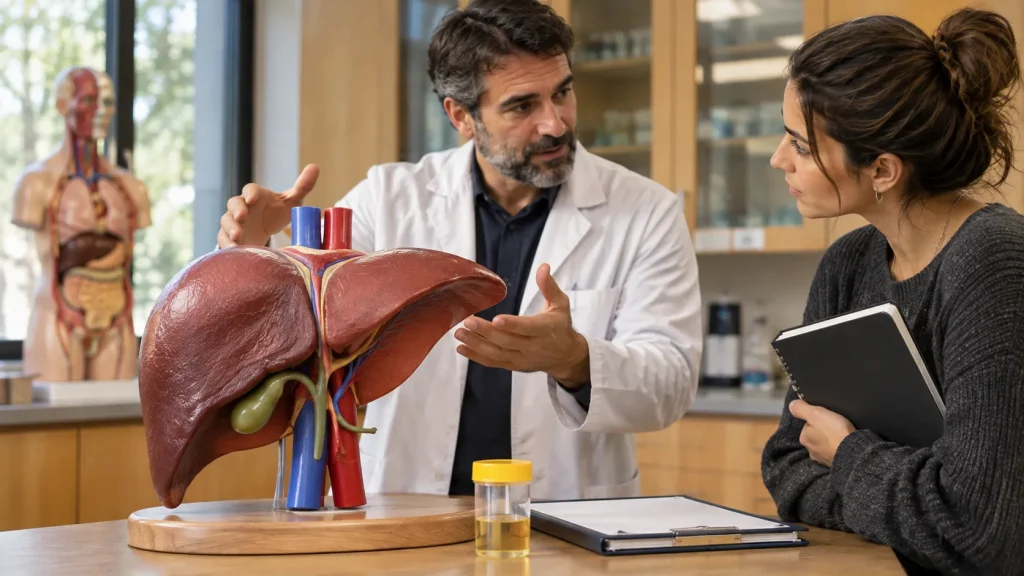
The MDMA half-life is about 8 hours in most adults. A drug’s half-life is the time it takes the body to clear half of what it absorbed. Doctors generally estimate that a substance is mostly gone after about five half-lives, which for MDMA is roughly 40 hours. Detection tests can still find the drug and its byproducts after that point.
After you swallow MDMA, it reaches the bloodstream within about 15 minutes, according to the National Institute on Drug Abuse. The high peaks roughly 45 minutes later. The liver then breaks MDMA into metabolites, including one called MDA, and the kidneys remove most of them in urine. Drug tests often look for these metabolites as well as MDMA itself.
MDMA Detection Times by Drug Test
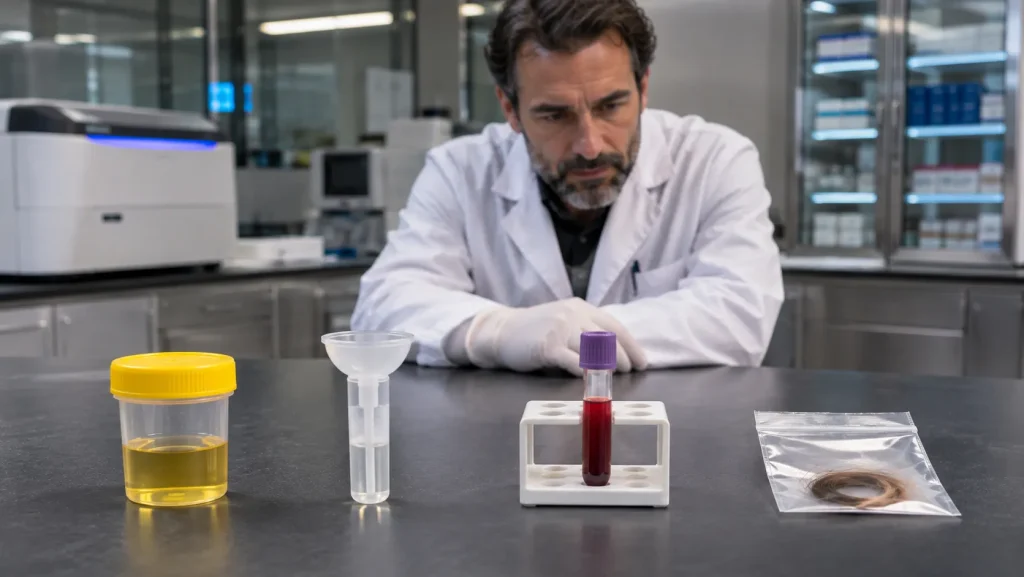
An MDMA drug test works by looking for the drug or its metabolites in a bodily sample. People often ask what MDMA is on a drug screen. On most standard panels, MDMA is flagged as part of the amphetamine class, and a positive result is usually confirmed with a more specific lab test. Detection windows differ by sample type.
How Long Does Molly Stay in Your Urine?
Urine is the most common sample for workplace and probation testing. How long does Molly stay in your urine? Typically, one to four days after the last dose. Heavy or frequent use can stretch that window, and some people test positive for up to 5 days.
How Long Does Molly Stay in Your Blood?
How long does Molly stay in your blood? Usually up to 24 hours. Blood tests are less common for routine screening because the window is short, but they are used after accidents or in medical and legal settings.
How Long Does Molly Stay in Your Saliva?
How long does Molly stay in your saliva? Generally, 1 to 2 days. Saliva swabs are easy to give on the spot, so some employers and roadside programs use them.
How Long Does Molly Stay in Your Hair?
Hair tests have the longest window. MDMA can be found in a hair sample for up to 90 days, because traces get locked into the hair shaft as it grows. These tests are used less often, but they show a longer history of use.
| Test Type | Typical detection window |
| Blood | Up to 24 hours |
| Saliva | 1–2 days |
| Urine | 1–4 days |
| Hair | Up to 90 days |
MDMA Detection Timeline: From Use to Elimination
First Few Hours After Taking MDMA
The drug is absorbed quickly, peaks within an hour, and the main effects last roughly 3 to 6 hours. MDMA is at its highest level in blood and saliva during this period, so every test type can detect it.
12–24 Hours After Taking MDMA
Effects are gone, but the body is still clearing the drug. Many people feel tired, irritable, or low in mood. Blood tests may still be positive near the end of this window, and urine and saliva tests will almost certainly be positive.
1–3 Days After Taking MDMA
Most of the drug has been eliminated, but metabolites linger. Urine and saliva tests can still return positive results. NIDA notes that low mood, anxiety, and memory problems can last for several days after use.
Several Days or Longer After Taking MDMA
By day 4 or 5, blood, saliva, and most urine tests are likely to be negative after a single use. Hair is the exception, and it can show MDMA for up to 90 days. For frequent users, urine tests can stay positive longer.

Factors That Affect How Long MDMA Stays in Your System
Several things change how quickly someone clears the drug:
- Dose and frequency: Higher doses and repeated use cause more drug, and its metabolites to build up.
Metabolism: Your body’s metabolism of MDMA is also affected by genetics and liver function. - Age and body composition: Older people often clear drugs more slowly.
- Kidney and liver health: Slow function in either organ slows clearance.
- Hydration and urine pH: More acidic urine can speed clearance, though drinking large amounts of water is not safe, because MDMA can cause the body to retain water.
- Purity and contents: Pills sold as Ecstasy or Molly often contain other drugs. NIDA warns that products sold as Molly may contain little or no MDMA.
People also ask, does Molly expire? Like many substances, MDMA can degrade over time, especially if stored in heat or light, and street products have unknown purity and age. A degraded or contaminated product is unpredictable and can be more dangerous, not safer.

Can You Get MDMA Out of Your System Faster?
There is no safe shortcut. Detox drinks, supplements, and “flush” methods have no reliable evidence behind them, and drinking excessive water can be dangerous. Time is the only dependable way to clear MDMA, along with healthy liver and kidney function, rest, and balanced nutrition.
If you keep using MDMA and feel unable to stop, the better question is not how to pass a test but how to get support. A structured residential treatment in Los Angeles offers around-the-clock care in a stable setting away from triggers.

MDMA Withdrawal and When to Seek Help
MDMA is not usually associated with severe physical withdrawal like opioids or alcohol, but many people experience a hard comedown. Common symptoms include, but is not limited to fatigue, low mood, anxiety or irritability, trouble concentrating, and loss of appetite.
For some, these symptoms last days or weeks, especially after heavy or long-term use. Seek help if you feel depressed or hopeless, can’t cut back despite wanting to, or are mixing MDMA with other drugs or alcohol. Professional drug detox in Los Angeles can provide medical monitoring and support during the hardest days.

MDMA Addiction Treatment in Los Angeles, CA
Los Angeles has a huge nightlife and festival scene, and MDMA is a common part of that. For some, occasional use becomes a pattern that interferes with work, relationships, and mental health.
A strong program typically includes medical detox when needed, individual and group therapy, treatment for anxiety, depression, or trauma, and a plan for staying well after leaving. For people who want privacy, comfort, and a high level of personal attention, luxury rehab in Los Angeles provides a calm, supportive setting where recovery comes first.
You don’t have to wait for a bad test result or a crisis to ask for help. If MDMA is causing problems in your life, reach out to a treatment provider today.
Ready to take the first step toward recovery? Call us 24/7 at +1-805-888-8000 or submit our online contact form to speak with our team.
Reference
National Institute on Drug Abuse. (2024, April 19). MDMA (Ecstasy/Molly). National Institutes of Health. https://nida.nih.gov/research-topics/mdma-ecstasy-molly