
Table of Contents
- What Is an Alcoholic Nose?
- Drinker’s Nose
- Why Do Alcoholics Have Red Noses? Causes Of Rhinophyma
- Risk Factors for Drinker’s Nose
- What Does an Alcoholic Nose Look Like?
- Alcoholic Nose Before and After
- Alcohol and Rosacea: What’s the Connection?
- Can an Alcoholic Nose Go Away?
- Treatment For Rhinophyma Or Alcoholic Nose
- Does Having a Red Nose Mean You Have an Alcohol Problem?
- Alcohol Addiction Treatment in Los Angeles, CA
If you’ve ever heard someone joke about a “drinker’s nose” or assumed a relative’s red, swollen nose meant they had a drinking problem, you’ve run into one of the most persistent myths in popular culture. The condition behind the stereotype is called rhinophyma, and while it has been linked to alcohol for centuries, the real story is more nuanced.
An alcoholic nose isn’t necessarily caused by alcohol at all. For people already struggling with heavy drinking, understanding this condition can still open the door to an honest conversation about their relationship with alcohol. In Los Angeles and across California, where alcohol is deeply woven into social and industry culture, that conversation matters more than ever.

What Is an Alcoholic Nose?
Rhinophyma is a skin disorder that causes the nose to become enlarged, red, bumpy, and sometimes bulbous in shape. The common nickname is an alcoholic nose. Medically, rhinophyma is thought to be the most advanced form of a chronic skin disorder known as rosacea, phymatous subtype. The condition develops slowly, often over years, as the oil glands in the nose enlarge and the surrounding tissue thickens.
According to the Cleveland Clinic, treatment options range from dermabrasion and laser resurfacing to surgical reshaping, depending on how advanced the case is. The term “alcoholic nose” sticks around because the visible symptoms look like the flushed, ruddy complexion many people associate with heavy drinking.
Drinker’s Nose
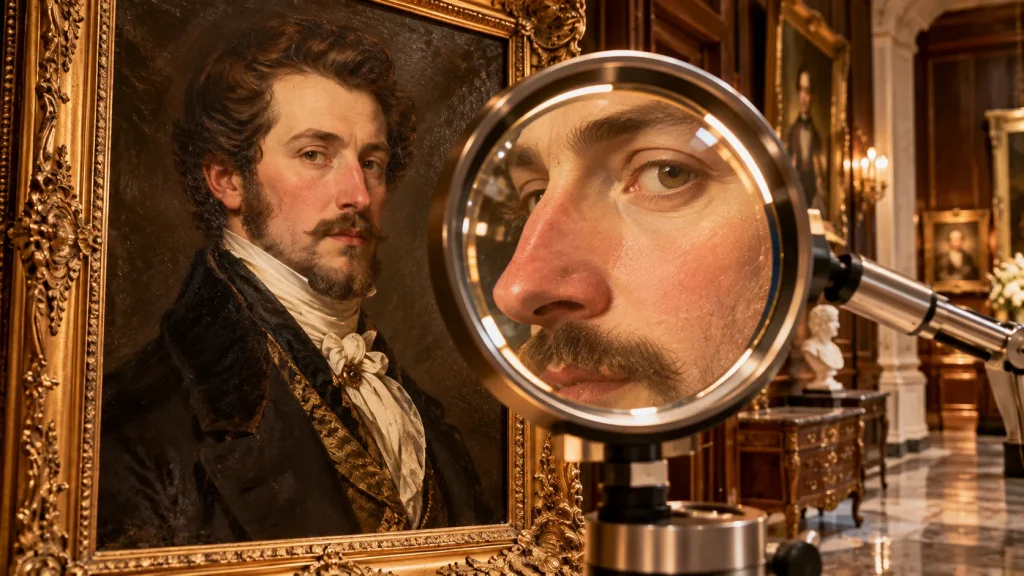
Rhinophyma has picked up a long list of nicknames over the years: drinker’s nose, booze nose, drinking nose, and even purple nose, referring to the deeper discoloration that can appear in more advanced cases. You’ll also see it described as a bulbous nose alcohol condition, since the swelling and irregular shape are the most visually striking symptoms.
Historical literature only reinforced the stereotype. Writers from Chaucer to Shakespeare described characters with a bulbous, wine-colored nose as a shorthand for excessive drinking. The nickname has outlived the science, which is part of why so many people still search for answers about what actually causes an alcoholic nose, and why terms like drinking nose and booze nose remain common even in casual conversation today.

Why Do Alcoholics Have Red Noses? Causes Of Rhinophyma
Why do alcoholics have red noses if alcohol isn’t the direct cause? Most people with rhinophyma have never had an alcohol use disorder, and most heavy drinkers never develop rhinophyma. What alcohol does is dilate blood vessels and trigger flushing, which can make existing rosacea symptoms more visible and more severe.
A notable study covered by the National Rosacea Society found that heavier drinking was associated with more severe rhinophyma among people who already had the condition, likely because alcohol is such a strong trigger for facial flushing and vasodilation. Genetics, chronic sun exposure, fair skin, and long-standing untreated rosacea are considered far more central to the development of rhinophyma than alcohol consumption on its own.

Risk Factors for Drinker’s Nose
Certain groups are more likely to develop rhinophyma. It’s significantly more common in men than women, tends to appear in middle age or later, and shows up more often in people with fair skin and a family history of rosacea. Frequent sun exposure, hot beverages, spicy food, and emotional stress can all aggravate rosacea over time, increasing the odds that it eventually progresses to phymatous changes.
Heavy or frequent alcohol use is a contributing trigger rather than a root cause, but it’s worth noting that regular heavy drinking often comes with increased alcohol tolerance, which can make it harder for someone to notice how much their drinking has escalated.
What Does an Alcoholic Nose Look Like?
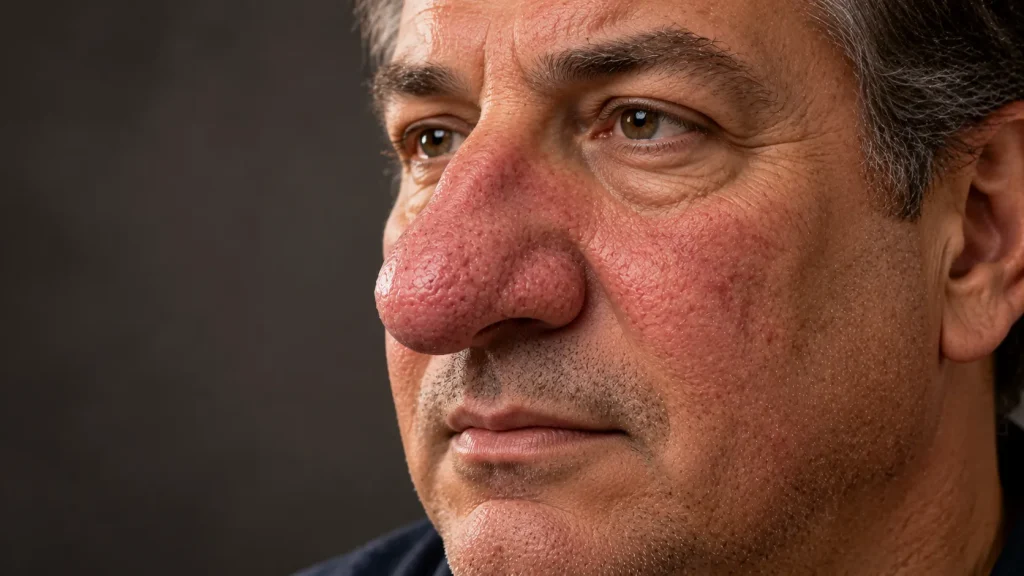
The nose of an alcoholic is usually red at first. Small blood vessels show on the nose. With time the skin may thicken , the oil glands may enlarge , and the nose may become bumpy , uneven and bulbous . In the more severe cases the tip and lower half of the nose are usually the most affected, the underlying bone and cartilage being unaffected.
The National Rosacea Society study on rhinophyma severity notes that phymatous changes can also occur on the chin, forehead, ears, or eyelids, though the nose is by far the most common and most noticeable location. Skin tone changes are common too, ranging from persistent pink or red to a deeper, purple nose appearance in longstanding, untreated cases. Many of the alcoholic nose pictures people find online show this progression clearly: mild redness and visible capillaries in early rosacea, followed by increasingly bumpy, enlarged, and discolored skin as phymatous changes set in.
NOTE: Comparing alcoholic nose pictures across different stages can be a useful way to understand how gradual and variable this condition really is, since not everyone progresses at the same pace or to the same degree.
Alcoholic Nose Before and After
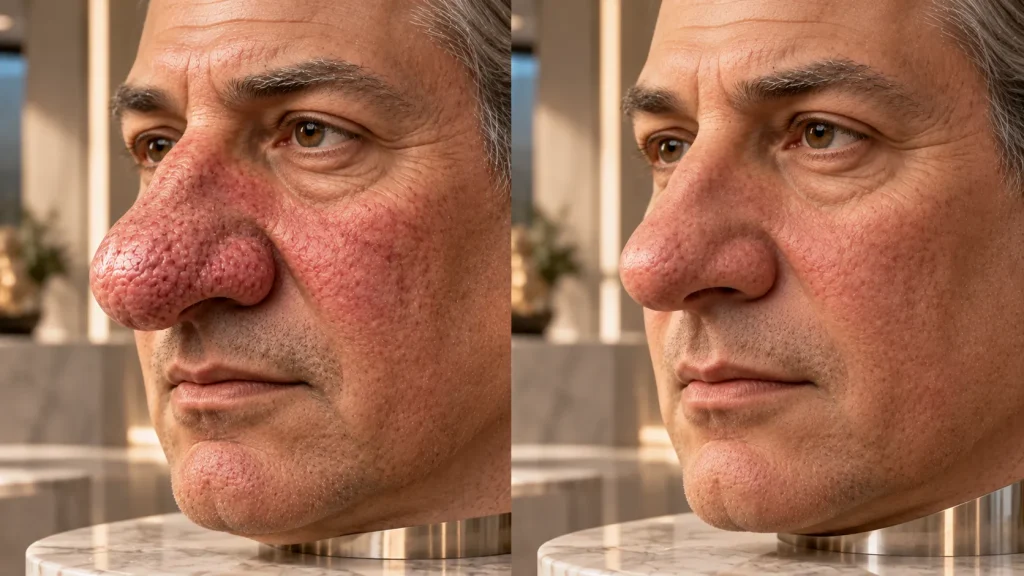
Searches for alcoholic nose before and after comparisons are common because the visual change with treatment can be dramatic. Early-stage redness and visible vessels typically respond well to topical medication and light-based therapies, while more advanced bulbous changes usually require laser resurfacing, dermabrasion, or surgical reshaping to restore a more typical nasal contour.
Catching rosacea early and treating it consistently is one of the best ways to prevent the progression that leads to these more dramatic before-and-after transformations. Results vary by individual, and a board-certified dermatologist is the right resource for anyone considering treatment.

Alcohol and Rosacea: What’s the Connection?
The real link between alcohol and an alcoholic nose runs through rosacea, not through alcohol use disorder directly. Alcohol is a well-documented rosacea trigger because it causes blood vessels to dilate, producing the flushed, red appearance rosacea sufferers are already prone to. Over time, repeated flushing episodes can make existing rosacea symptoms worse and may accelerate progression toward phymatous changes in people who are already predisposed.
That’s really the core of the red nose alcohol connection: not causation, but aggravation. If flushing and other symptoms only show up alongside heavier drinking sessions, it may be worth looking at the drinking pattern itself, and alcohol addiction treatment in Los Angeles is one place to start that conversation.

Can an Alcoholic Nose Go Away?
Early rhinophyma can often be managed and even reversed with consistent rosacea treatment, including topical medications, oral antibiotics, and avoiding known triggers like alcohol, sun exposure, and spicy food. Once the skin has thickened and changed shape, though, the tissue changes typically don’t reverse on their own and usually require a dermatologic procedure to correct. For someone whose rosacea is being worsened by ongoing heavy drinking, addressing the drinking itself is just as important as treating the skin, and that process often starts with a medically supervised alcohol detox in Los Angeles before longer-term care begins.

Treatment For Rhinophyma Or Alcoholic Nose
Treatment for an alcoholic nose depends heavily on severity. Mild cases often respond to topical treatments like metronidazole or azelaic acid, along with oral medications that reduce inflammation and oil gland activity. More advanced cases typically call for procedures such as dermabrasion, cryotherapy, or laser resurfacing to remove excess tissue and reshape the nose.
When ongoing alcohol use is part of the picture, treating the skin alone won’t resolve the underlying trigger, which is why a structured residential treatment program can be a useful complement to dermatologic care.

Does Having a Red Nose Mean You Have an Alcohol Problem?
Not necessarily. A red or bulbous nose is far more likely to indicate rosacea than an alcohol use disorder, and plenty of people with rhinophyma have never struggled with drinking at all. If the red nose comes with other symptoms such as drinking more than planned, needing alcohol to relax or function, failed attempts to cut back, or family and friends raising concerns, it’s worth taking a closer look at drinking habits rather than thinking the skin
This matters even after someone stops drinking: unresolved thinking patterns and behaviors can persist in what’s sometimes called a dry drunk state, where the mindset behind the drinking is still present even without the alcohol itself.

Alcohol Addiction Treatment in Los Angeles, CA
Alcohol misuse remains a significant public health issue in California. State data shows that roughly 18% of California adults binge drink at least once a month, and the state records more alcohol-related deaths than any other in the country. If heavy drinking has become part of your daily routine, or if you’re worried about a loved one’s alcohol use, professional support is available.
The House of Life offers luxury rehab in Los Angeles that addresses both the physical and psychological sides of alcohol use disorder, in a setting built around comfort and privacy during recovery. Whether the concern is a visible symptom like an alcoholic nose or a broader pattern of drinking that’s gotten out of hand, reaching out for an evaluation is a reasonable and worthwhile step.
Ready to take the first step toward recovery? Call us 24/7 at +1-805-888-8000 or submit our online contact form to speak with our team.
References
Cleveland Clinic. (n.d.). Rhinophyma. https://my.clevelandclinic.org/health/diseases/rhinophyma
National Rosacea Society. (2019, Fall). Is severity of red nose linked to alcohol intake? Rosacea Review. https://www.rosacea.org/rosacea-review/2019/fall/is-severity-rosacea-red-nose-linked-alcohol-intake