
Table of Contents
- What Is a Sober Living House?
- How Much Does Sober Living Cost?
- Factors That Affect Sober Living Costs
- Who Pays for Sober Living Homes?
- Does Insurance Pay for Sober Living?
- What Costs Do People Not Expect in Sober Living?
- Can You Afford Sober Living Without Insurance?
- When Is Sober Living Worth the Cost?
- Sober Living in California
- References
Figuring out who pays for sober living homes is one of those questions that seems like it should have a simple answer, and then doesn’t. Unlike a hospital stay or a course of outpatient therapy, sober living isn’t really medical care in the eyes of insurance companies. It’s housing. That distinction ends up shaping almost everything about who covers the bill, and it’s why so many families get caught off guard by costs nobody warned them about.
This guide walks through what sober living actually costs, who typically ends up paying for it, whether insurance or government programs help at all, and what expenses tend to sneak up on people who assumed the monthly rent was the whole story. If you’re weighing options in Southern California, a luxury rehab in Los Angeles with a clear cost breakdown upfront can make this whole decision easier to plan around.

What Is a Sober Living House?
What is a sober living house, exactly? It’s a residential home, usually shared among several people in early recovery, where residents agree to stay substance-free and follow house rules like curfews, chores, and drug testing. Unlike a licensed treatment facility, most sober living homes don’t provide clinical services on-site. Residents often attend outpatient therapy, work, or go to school during the day and come back to a structured, supportive sober living environment at night.
The National Alliance for Recovery Residences (NARR), the nonprofit that sets national standards for this kind of housing, organizes these residences into four levels of support, ranging from Level 1 peer-run homes with minimal structure to Level 4 homes that coordinate closely with clinical treatment (National Alliance for Recovery Residences, n.d.). Where a house falls on that spectrum has a lot to do with what it costs and who’s likely to pay for it.

How Much Does Sober Living Cost?
Sober living costs vary more than most people expect going in. According to cost data compiled by MARR, a nonprofit recovery residence organization, national averages for a shared room typically run $450 to $800 per month, while private rooms range from $1,000 to $2,500, with coastal cities like Los Angeles pricing considerably higher than that (MARR, n.d.). NARR’s own framework roughly tracks with this: Level 1 peer-run homes tend to sit at the lower end of that range, while Level 4 homes with more clinical coordination can run several thousand dollars a month.
In Los Angeles specifically, monthly costs across the county commonly land between $900 and $3,000 or more, with higher-end homes bundling in extra clinical support, better locations, or added amenities. So the honest answer to “what’s the sober living house cost” is: it depends enormously on where the house is, what level of support it offers, and how much privacy you want.

Factors That Affect Sober Living Costs
Location and Local Rent
Sober living homes don’t operate outside the local housing market. A house in a high-rent neighborhood is going to cost more per bed than one further out, simply because the underlying rent or mortgage is higher. This is a big reason why sober living in coastal California tends to run higher than in most other parts of the country.
Level of Support and Structure
A peer-run home with a house manager and basic accountability costs less than one with credentialed staff, structured programming, or coordination with an outside treatment provider. More staff and services generally mean higher monthly fees.
Room Type and Privacy
Shared rooms are consistently cheaper than private ones, sometimes by a significant margin. Splitting a room with one or two other residents is often the most affordable way into a sober living home, and it’s also the norm rather than the exception in most facilities. For anyone earlier in the process, our alcohol detox in Los Angeles program is often the first clinical step before a resident is even ready to think about sober living costs at all.
Who Pays for Sober Living Homes?
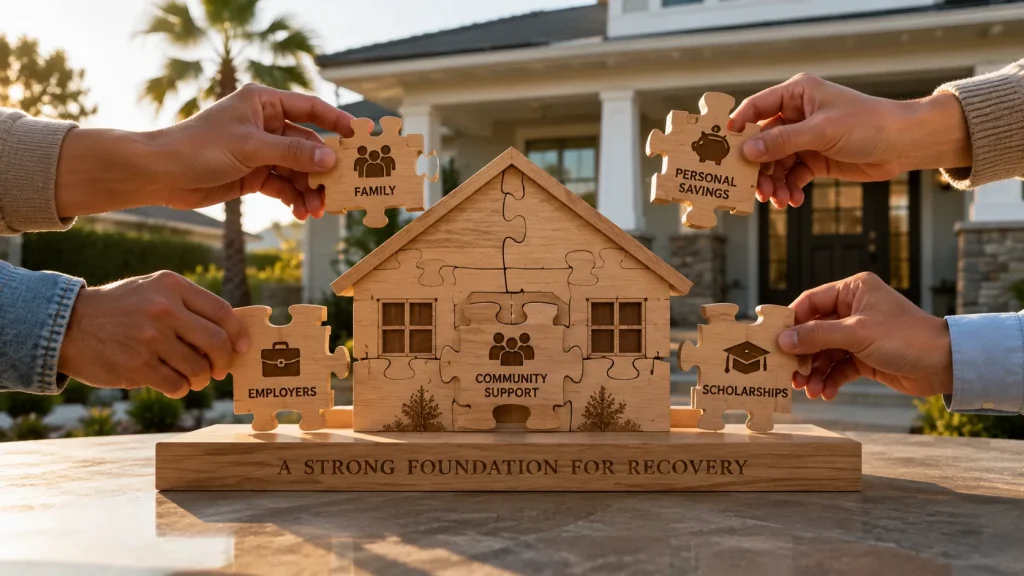
There’s no single answer to who pays for sober living homes, because most people end up piecing together funding from more than one source.
Paying Out of Pocket
This is the most common arrangement. Residents (or their families) cover the monthly fee directly, the same way they’d pay rent for any other housing. For people who are working or have some savings, this is often the most straightforward path, even if it isn’t always the cheapest one.
Family Support
It’s extremely common for family members to cover some or all of the cost, especially in the first few months when the resident may not yet be employed. Some families treat this as a bridge until their loved one gets back on their feet financially.
Government and Nonprofit Assistance
There’s real federal money moving into this space right now, part of the broader answer to who pays for sober living homes at scale rather than case by case. In 2025, the Substance Abuse and Mental Health Services Administration awarded more than $45 million in supplemental funding specifically to expand sober and recovery housing services for young adults with opioid or stimulant use disorders (U.S. Department of Health and Human Services, 2025). That money typically flows through state agencies and local providers rather than directly to individuals, which is why state funded sober living homes usually come through a county behavioral health department, a court referral, or a nonprofit that received grant funding, rather than a program someone applies to on their own.
Scholarships and Sliding-Scale Fees
Some individual homes offer reduced rates, payment plans, or scholarships for residents who can demonstrate financial need. It’s worth asking directly, since these arrangements aren’t always advertised.

Does Insurance Pay for Sober Living?
Mostly, no, at least not for the housing itself. Because sober living homes aren’t licensed clinical facilities in most cases, health insurance typically doesn’t cover the rent the way it might cover a stay in residential treatment. That said, is sober living covered by insurance in any form? Sometimes, indirectly. If a resident is attending outpatient therapy or alcohol addiction treatment while living in a sober living home, that clinical care can often be billed separately to insurance, even though the housing itself is paid out of pocket.
Finding sober living that takes insurance for the housing portion specifically is rare, and worth confirming directly with a facility rather than assuming based on their marketing. As for does Medicaid pay for sober living, the same basic rule applies: Medicaid, including Medi-Cal in California, generally doesn’t cover sober living rent because it isn’t classified as a medical service, though it may cover qualifying outpatient treatment attended during a resident’s stay.
What Costs Do People Not Expect in Sober Living?
Move-In Costs
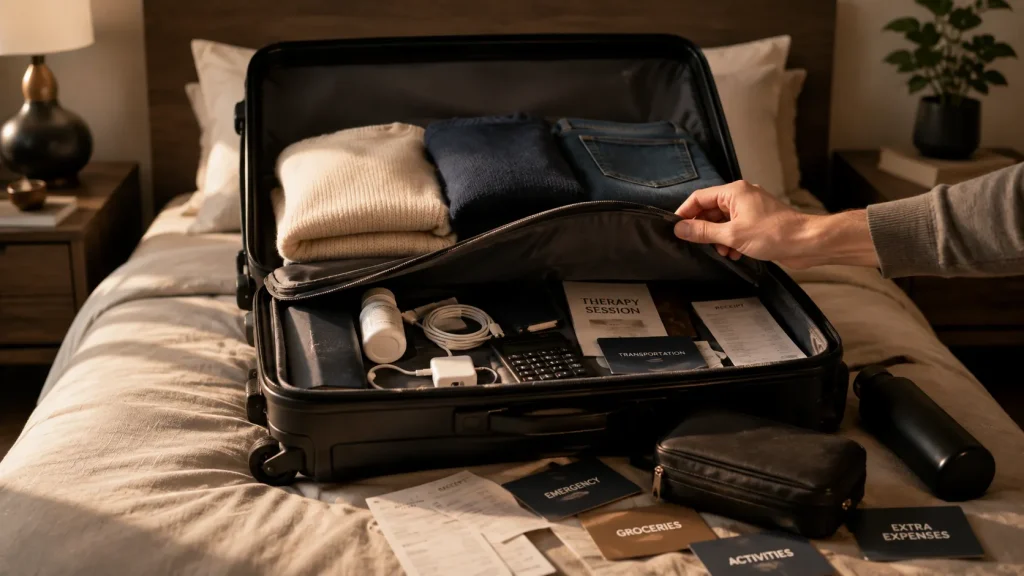
Most homes require a security deposit, often equal to a month’s rent, plus the first month upfront. Some also ask for a background check fee or an intake assessment fee before move-in.
House Fees Beyond Rent
Drug testing, house meetings, and mandatory 12-step attendance often come with small added costs. Some homes also charge separately for linens, parking, or utilities not included in base rent.
Personal Living Expenses
Food, transportation to work or appointments, a phone plan, and basic personal items are all costs that exist independent of the sober living fee itself, and they’re easy to underestimate when budgeting for the first few months.

Can You Afford Sober Living Without Insurance?
For a lot of people, yes, especially at the lower end of the cost range. Shared rooms in peer-run homes are genuinely affordable for someone working even a modest job, and many residents cover rent through part-time or full-time employment once they’re a few weeks into their stay. Combining a sliding-scale home, some family support, and a steady paycheck is a common, workable path. It’s also worth pairing sober living with the right level of clinical care beforehand. Our drug detox in Los Angeles is one option for people who need medical stabilization before transitioning into a sober living environment.
When Is Sober Living Worth the Cost?
Sober living tends to earn its cost when someone is stepping down from residential treatment and doesn’t yet have a stable, substance-free place to return to. The structure, accountability, and peer support built into a good sober living home genuinely reduce relapse risk during a fragile stretch of early recovery. It’s less clearly worth it for someone who already has strong support at home and no real risk factors in their living situation. In that case, the money might be better spent on outpatient therapy instead.

Sober Living in California
California treats most sober living homes differently than licensed treatment facilities, which matters for cost and for how these homes operate. Under Health and Safety Code Section 11834.23, a home serving six or fewer residents is legally treated as an ordinary single-family residence for zoning purposes, regardless of whether the residents are related, and it’s exempt from state licensing requirements as long as it doesn’t provide clinical services on-site (Cal. Health & Safety Code § 11834.23). Many operators still pursue voluntary certification through the California Consortium of Addiction Programs and Professionals, the state’s recognized affiliate of NARR, as a signal of quality even though it isn’t legally required.
At The House of Life, we work with residents through detox and residential treatment in Los Angeles first, so that a transition into sober living afterward is built on a stable clinical foundation rather than starting from scratch. Ready to take the first step toward recovery? Call us 24/7 at +1-805-888-8000 or submit our online contact form to speak with our team.

Sober Living Costs: FAQ
What Is the Difference Between Sober Living and a Halfway House?
How Long Do People Usually Stay in Sober Living?
How Much Does Sober Living Typically Cost per Month?
How Do People Pay for Sober Living?
Does Insurance Cover Sober Living Homes?
Does the Government Pay for Sober Living?
Are There Free Sober Living Options Available?
Is Sober Living Covered by the Fair Housing Act?
Is Sober Living a Good Investment?
This article is for general educational purposes and isn’t a substitute for financial, legal, or medical advice. Costs, funding options, and regulations can change, so confirm current details directly with a sober living provider or your local behavioral health department.
References
Cal. Health & Safety Code § 11834.23. Retrieved July 24, 2026, from https://codes.findlaw.com/ca/health-and-safety-code/hsc-sect-11834-23/
MARR. (n.d.). Sober living cost guide. Retrieved July 24, 2026, from https://www.marrinc.org/blog/sober-living-cost-guide/
National Alliance for Recovery Residences. (n.d.). Standards. Retrieved July 24, 2026, from https://narronline.org/standards/
U.S. Department of Health and Human Services. (2025, September 23). SAMHSA awards more than $45 million in supplemental funding to support young adult sober housing services. Retrieved July 24, 2026, from https://www.hhs.gov/press-room/samhsa-awards-45-million-funding-support-sober-housing-services.html
U.S. Department of Justice. (2004, May 14). Joint statement of the Department of Housing and Urban Development and the Department of Justice: Reasonable accommodations under the Fair Housing Act. Retrieved July 24, 2026, from https://www.justice.gov/crt/about/hce/jointstatement_ra.php