Table of Contents
Strictly speaking, liquid cocaine is a solution of cocaine hydrochloride dissolved in a liquid base, typically water or saline. Because cocaine hydrochloride is a salt, it is highly soluble.
However, the term is used in three distinct ways:
- Clinical/Medical: A 4% or 10% solution used by surgeons.
- Illicit Drug Use: Powder dissolved cocaine in water for intravenous (IV) injection. As a slang for cocaine, this is often referred to simply as shooting a fix.
- The “Liquid Cocaine” drink is a cocktail composed with Jägermeister, Goldschläger, rum, and pineapple juice. It doesn’t have any real cocaine in it, but it gets its name from how much it makes you feel like a stimulant.
What Is Liquid Cocaine?
To understand the liquid form, it helps to look at the two primary physical states of the drug and get a glimpse into the differences between crack and cocaine:
- Cocaine Hydrochloride (Powder): A white, crystalline powder that is usually snorted or dissolved cocaine in water.
- Cocaine Base (Crack): Processed with baking soda or ammonia to create “rocks” that can be smoked. Crack is not water-soluble and cannot easily be turned into a liquid without chemical modification.
Other Forms of Cocaine
To understand the liquid form, it helps to look at the two primary physical states of the drug:
- Cocaine Hydrochloride (Powder): A white, crystalline powder that is usually snorted or dissolved in water.
- Cocaine Base (Crack): Processed with baking soda or ammonia to create “rocks” that can be smoked. Crack is not water-soluble and cannot easily be turned into a liquid without chemical modification.
How Liquid Cocaine is Made and Used
In a street or illicit setting, the transition from powder to liquid is a process of chemical suspension. While many users believe this “cleans” the drug, the reality is that the preparation process often introduces new, life-threatening contaminants into the solution.
What Is in a Liquid Cocaine Solution?
The primary ingredient is cocaine hydrochloride (HCl), a salt-based powder. Because it is a salt, it is highly soluble in water. However, street-grade cocaine is rarely pure; it is frequently “cut” with substances like:
- Levamisole: A veterinary dewormer that can cause skin necrosis and immune system failure.
- Fillers:Fillers include cornflour, talcum powder, or sugars that do not dissolve completely and may induce bloodstream obstructions (embolisms).
The Illicit Preparation Process (“Cooking”)
To prepare the drug for injection, users must create a “shot.” This involves a process known as “cooking,” which presents several medical hazards:
- Dissolution in a “Cooker”: The powder is placed in a small metal container, often a spoon or a bottle cap.
- Adding the Solvent: To prepare the drug for injection, users mix it with a liquid. Water or saline is used for powder cocaine. For crack cocaine, an acid like citric acid or vitamin C is added. This converts it into a form that can dissolve.
- The Role of Heat: A flame is applied to the bottom of the cooker. While heat helps the cocaine dissolve in water more quickly, it also helps dissolve dangerous impurities and bacteria that would otherwise remain solid.
- Filtration: Users draw the liquid through a filter—often a piece of cotton or a cigarette filter. These aren’t sterile. They leave behind tiny fibers that enter the bloodstream and can trigger “cotton fever,” a severe flu-like reaction.
Mechanisms of Use and Bioavailability
The primary reason liquid cocaine is used illicitly is for intravenous (IV) injection. This method bypasses the body’s natural defenses (like the digestive system or the mucous membranes of the nose).
- 100% Bioavailability: When injected, every milligram of the drug enters the bloodstream simultaneously. This creates a “rush” that peaks within 10 to 15 seconds.
- Skin Popping: If a user cannot find a viable vein, they may resort to “skin popping”—injecting the liquid cocaine directly under the skin or into a muscle. This is extremely dangerous, as cocaine is a vasoconstrictor. It shuts off blood flow to the injection site, which frequently leads to rapid tissue death (necrosis) and gangrene.

Does Cocaine Dissolve in Water
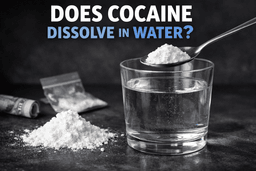
Yes. Cocaine hydrochloride is highly water-soluble. This chemical property is why the drug is so easily absorbed by the mucus membranes in the nose when snorted. When a user puts cocaine in water, it disappears into the liquid almost instantly, creating a clear or slightly cloudy solution.
The Medical Use of Liquid Cocaine
While cocaine is widely known as a dangerous street drug (Schedule II), it has a legitimate place in the operating room. The FDA has approved specific brands, such as Goprelto and Numbrino, for medical use.
- Doctors use medical-grade liquid cocaine for:
- Anesthesia: Numbing the mucous membranes of the oral, laryngeal, and nasal cavities.
- Vasoconstriction: It narrows blood vessels, which helps limit bleeding during delicate nasal or throat surgeries.

The Street Myth and Dangerous Reality
There is a common misconception that “liquid cocaine” is a safer or “cleaner” way to use the drug. This is a dangerous myth. When someone uses liquid cocaine alcohol (the cocktail) or injects the drug, the strain on the heart is immense.
The “street” version is never pure. It is often “cut” with dangerous additives like levamisole (a dewormer) or fentanyl. When dissolved into a liquid, these contaminants are injected directly into the veins, bypassing the body’s natural filters.
Ways of Smuggling Liquid Cocaine
In recent years, law enforcement has seen a rise in liquid cocaine smuggling. Cartels dissolve large quantities of cocaine powder into liquids, such as shampoo, wine, or oil, to make the drug undetectable to traditional drug-sniffing methods.
Once the “liquid” reaches its destination, chemists use a process of evaporation and chemical extraction to turn the liquid back into a sellable powder. This process often involves toxic solvents that can leave behind dangerous residues for the end-user.
Side Effects and Risks of Liquid Cocaine Specifically
The primary danger of the liquid cocaine drug experience lies in its “pharmacokinetics”—or the speed at which it hits the brain. When cocaine is snorted (insufflated), it must pass through mucous membranes, taking 3 to 5 minutes to reach its peak. When injected in liquid form, it reaches the brain in seconds.
This near-instantaneous “rush” is followed by an equally rapid “crash,” creating a volatile cycle of use that significantly increases the risk of a fatal overdose.
Short-Term Physical Risks
Because liquid cocaine enters the bloodstream directly and at 100% bioavailability, the immediate strain on the body is profound:
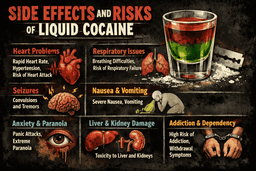
- Acute Cardiovascular Stress: Liquid cocaine causes an immediate spike in norepinephrine and dopamine. This can lead to arrhythmia(irregular heartbeat), sudden cardiac arrest, or an aortic dissection (a life-threatening tear in the heart’s main artery).
- Injection-Related Infections: Beyond the drug itself, injecting liquid cocaine delivers microorganisms straight into the bloodstream. This frequently leads to:
- Endocarditis: A life-threatening infection of the heart valves.
- Sepsis: A widespread “blood poisoning” that may cause organ failure.
- Skin Abscesses: Painful, swollen pockets of infection at the injection site.
- Respiratory Distress: This can mean fluid building up in the lungs, a condition known as pulmonary edema, or something even more severe like “crack lung,” where chest pain, fever, and gasping for air become terrifying realities. It’s your body literally struggling to breathe.
- Bloodborne Pathogens: Sharing needles or “works” to prepare liquid cocaine creates a direct pathway for HIV, Hepatitis B, and Hepatitis C.
Long-Term Health Risks
Long-term use can cause users to lose contact with reality. Common symptoms include:
- Neurological Decline and Stroke: The constant constriction of blood vessels (vasoconstriction) deprives the brain of oxygen. Over time, this increases the risk of ischemic strokes, cerebral hemorrhaging, and early-onset cognitive decline.
- Stimulant-Induced Psychosis: Long-term users often lose touch with reality. This includes:
- Formication: The sensation of insects crawling under the skin. This often leads to scratching and picking that causes scarring.
- Extreme Paranoia: A persistent feeling of being watched or followed. This can result in defensive or aggressive behavior.
- Vein Collapse and Vascular Damage: Repeated injections cause veins to scar over time. Once veins collapse, they can no longer be used. This can lead to peripheral vascular disease. In severe cases, reduced blood flow may require amputation of fingers, toes, or limbs.
- Organ Failure: Street-grade cocaine is often cut with toxic substances like levamisole. These can cause permanent damage to the kidneys and liver.
Cocaine Addiction Treatment in Los Angeles, CA
Understanding what liquid cocaine is makes one thing clear: it’s a high-risk behavior that can lead to permanent bodily harm or a fatal overdose. But cocaine addiction is a treatable medical condition, and no one has to face it alone. At The House of Life, a luxury rehab in Los Angeles, our clinical specialists combine expert medical care with a calm, restorative environment where real healing can begin.
If you or someone you love is ready for a way forward, our team is here to help. We provide comprehensive cocaine addiction treatment in Los Angeles that treats the whole person, not just the symptoms, so you can rebuild your health, your stability, and your life.
Ready to take the first step toward recovery from cocaine addiction? Call us 24/7 at +1-805-888-8000 or submit our online contact form to speak with our team.
References:
Australian Drug Foundation. (2023, November 8). Cocaine. https://adf.org.au/drug-facts/cocaine/ Chirico, R. (2005). Field guide to cocktails: How to identify and prepare virtually every mixed drink at the bar. Quirk Books.
Liberty, H. J., Johnson, B. D., & Fortner, N. (2004). Detecting cocaine use through sweat testing: multilevel modeling of sweat patch length-of-wear data. Journal of analytical toxicology, 28(8), 667–673. https://doi.org/10.1093/jat/28.8.667
United Nations Office on Drugs and Crime. (2004). Coca / Cocaine market (Chapter 5). In World Drug Report 2004 (pp. 105–142). https://www.unodc.org/pdf/WDR_2004/Chap5_coca.pdf
Pujol-Cano, N., Molina-Romero, F. X., Jiménez-Segovia, M., Oseira-Reigosa, A., Bonnin-Pascual, J., Palma Zamora, E., … Morón-Canis, J. M. (2021). Liquid cocaine body packing: a rare method for drug smuggling. Clinical Toxicology, 59(5), 445–447. https://doi.org/10.1080/15563650.2020.1817480