Table of Contents
- What Does “Greening Out” Mean?
- The Science Behind “Greening Out”
- What Causes a Green Out?
- Common Symptoms and Signs of Greening Out
- How Long Does Greening Out Last?
- What to Do If Someone is Greening Out
- Is Greening Out Dangerous?
- How to Prevent Greening Out
- Greening Out vs Cannabis Overdose
- When to Seek Help for Cannabis Use
- Marijuana Addiction and Treatment at The House of Life
Cannabis is more widely used today than ever before, and for most people, the experience is relaxing, social, or therapeutic. But occasionally, consuming too much can lead to a deeply unpleasant reaction commonly referred to as a “green out.” Whether you are a first-time user or a seasoned consumer, understanding what is greening out, why it happens, and how to manage it could make a critical difference.
This guide covers everything you need to know about what is greening out: from its causes and symptoms to recovery tips and prevention strategies.

What Does “Greening Out” Mean?
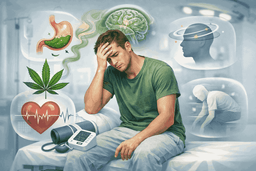
The term “greening out” (also sometimes spelled “greening out” or referred to as a “green out”) describes an acute adverse reaction to consuming too much cannabis. It is not a medical diagnosis, but it is a well-recognized phenomenon among cannabis users. The greened out meaning refers specifically to the overwhelming physical and psychological distress that follows THC overconsumption.
Greening out is a different beast entirely. While a moderate cannabis high might bring on a pleasant buzz, a sense of calm, and heightened senses, greening out hits hard and fast. It can trigger a wave of anxiety, dizziness, and nausea, and sometimes even a full-blown panic attack. Those who go through it often report feeling like they’re in real trouble, even though the episode usually passes without any lasting effects.
The phrase “green out” likely originates from the pale, greenish complexion some people develop when they feel severely nauseous — similar to feeling “seasick.” It is sometimes used interchangeably with “weed sickness” or “cannabis overconsumption.”

The Science Behind “Greening Out”
To understand what is greening out at a biological level, it helps to know how THC — the primary psychoactive compound in cannabis — interacts with the brain. THC binds to cannabinoid receptors (CB1 and CB2) that are distributed throughout the central nervous system and body. In moderate amounts, this binding produces the characteristic “high.”
When THC is consumed in excess, it overwhelms the endocannabinoid system. CB1 receptors in the hippocampus, amygdala, and prefrontal cortex are particularly sensitive to high THC concentrations. Overstimulation of these regions can trigger:
• Dysregulation of the body’s stress response (fight-or-flight activation)
• Disruption of normal heart rate and blood pressure regulation
• Impaired processing of sensory input, leading to dissociation or derealization
• Suppression of the vomiting reflex in some, but hyperstimulation of nausea pathways in others
Higher-potency cannabis products have become the norm in the U.S. market. Many cannabis products sold in California today contain 20–30% THC or higher.

What Causes a Green Out?
Greening out is almost always caused by consuming more THC than your tolerance allows. Several factors raise the risk:
High-Potency Products & Edibles
Can you green out from edibles? Absolutely — and edibles are among the most common causes. Because THC from edibles must first be metabolized by the liver (taking 30 minutes to 2 hours to kick in), many people consume a second dose before the first takes effect, inadvertently doubling up. Concentrates, live resins, and distillates (some reaching 70–90% THC) carry the same risk.
Blinkers, Mixing Substances & Laced Weed
“What is a blinker?” — it refers to holding a vape draw until the device’s auto-shutoff light blinks, delivering a large, rapid THC dose. Combining cannabis with alcohol (cross faded) significantly amplifies THC absorption and dramatically raises the risk of a green out. Sourcing matters too: laced weed mixed with substances like fentanyl or synthetic cannabinoids can cause reactions far more dangerous than a typical green out. Always buy from licensed California dispensaries.
Low Tolerance & Physical State
First-time users have significantly lower THC tolerance. Consuming on an empty stomach, while dehydrated, or when already anxious all heighten vulnerability.

Common Symptoms and Signs of Greening Out
People who have experienced a green out often describe a sudden shift from pleasant intoxication to overwhelming discomfort. Common reports include a racing heart, a spinning sensation, and an intense feeling of dread or impending doom. Some describe feeling disconnected from their body or surroundings.
The following are the most frequently reported green out symptoms:
• Intense anxiety or panic attack
• Rapid or irregular heartbeat (tachycardia)
• Nausea and vomiting
• Pale, clammy, or sweaty skin
• Dizziness or lightheadedness
• Shaking or trembling
• Paranoia or irrational fear
• Confusion and difficulty concentrating
• Feeling of dissociation or derealization (“this isn’t real”)
• Shortness of breath
• Temporary loss of consciousness (in rare, severe cases)
Importantly, not all of these symptoms appear simultaneously. Some people experience primarily psychological symptoms (anxiety, paranoia), while others are predominantly affected physically (nausea, dizziness). Knowing how to know if your greening out can help you act quickly and calmly rather than panic further.
How Long Does Greening Out Last?
For most people, the acute symptoms of a green out subside within 30 minutes to a few hours, once the peak THC level in the bloodstream starts to decline. However, the exact duration depends on several variables:
• Method of consumption — smoked or vaped cannabis peaks faster and typically resolves within 1–3 hours. Edible-induced green outs can last considerably longer.
• Amount consumed — larger doses prolong the episode.
• Individual metabolism — slower metabolizers take longer to process THC.
• Product potency — high-THC concentrates extend duration.
Can greening out last for days? In most cases, the acute episode resolves within a few hours. However, residual effects — fatigue, lingering unease, or cognitive fog — can persist into the following day.

What to Do If Someone is Greening Out
If you or someone nearby is experiencing a green out, the following steps can help:
1. Stay calm. Remind yourself or the affected person that the symptoms, while frightening, will pass. Panic worsens anxiety and can intensify symptoms.
2. Stop consuming. Immediately cease any further cannabis use.
3. Find a safe, quiet space. Reduce sensory input. Dim lighting, lower noise, and a comfortable seated or lying position can help.
4. Stay hydrated. Water or a light, sweet drink like juice can help stabilize blood sugar and ease nausea. Avoid alcohol and caffeine.
5. Eat something. A small snack — crackers, bread, or fruit — can help ground the person and ease nausea.
6. Use grounding techniques. The 5-4-3-2-1 technique (name 5 things you can see, 4 you can touch, 3 you can hear, 2 you can smell, 1 you can taste) is a proven anxiety-reduction strategy.
7. Have a calm, trusted person nearby. Reassurance from a calm friend significantly helps.
8. Monitor for serious symptoms. If the person loses consciousness, has a seizure, experiences chest pain, or cannot be reassured, call 911.
Knowing how to help someone greening out is a valuable skill — particularly given California’s thriving cannabis culture and the frequency with which overconsumption occurs at social gatherings.
Is Greening Out Dangerous?
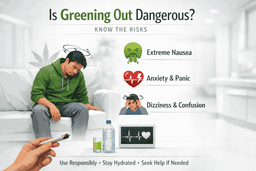
For most healthy adults, greening out is not life-threatening, there is no known lethal dose of THC alone. However, certain situations increase risk: pre-existing heart conditions (tachycardia can be dangerous), psychiatric vulnerability (cannabis can trigger episodes in those predisposed to psychosis), falls from disorientation, and laced substances. Research published in JAMA Psychiatry links heavy adolescent cannabis use to increased psychiatric risk.
How to Prevent Greening Out
- Start low, go slow — especially with edibles. Wait the full onset window before taking more.
- Check THC percentages — California dispensaries are legally required to label products accurately.
- Never combine cannabis with alcohol or other substances.
- Eat beforehand — a full stomach slows absorption.
- Avoid blinkers and other rapid high-dose inhalation methods.
- Choose balanced THC:CBD products — CBD may counteract some anxiety-producing THC effects.
- Consume in a familiar, comfortable environment with people you trust.
Greening Out vs Cannabis Overdose
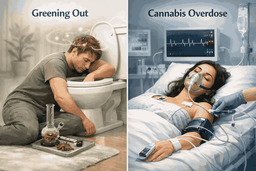
A green out is an acute adverse reaction caused by consuming more THC than one’s tolerance allows. It is temporary, typically self-limiting, and does not involve a lethal risk from cannabis alone.
A cannabis overdose, though rarely fatal in the way some substances can be, usually means experiencing more intense or lasting symptoms that might need a doctor’s help. This can mean:
• Ongoing psychosis or hallucinations that stick around for hours.
• Passing out or being unable to wake up.
• Seizures.
• Cannabinoid Hyperemesis Syndrome (CHS), which is a condition marked by severe, recurring vomiting linked to heavy, long-term cannabis use.
The availability of super-strong cannabis products and synthetic cannabinoids like K2 and Spice has made it harder to tell the difference between a “green out” and a more serious overdose. The California Poison Control System has seen a big jump in cannabis-related calls since the state made recreational marijuana legal in 2016.
When to Seek Help for Cannabis Use
Greening out occasionally might simply mean you misjudged a dose. But repeated green outs, or any of the following, suggest a deeper issue worth addressing:
• Using cannabis to cope with anxiety, depression, or trauma
• Needing larger and larger doses to feel the same effect
• Withdrawal symptoms (irritability, insomnia, appetite loss) when not using
• Cannabis interfering with work, relationships, or daily life
• Difficulty cutting back despite wanting to
According to SAMHSA, approximately 9% of people who try cannabis develop a dependence — rising to 17% among those who start in adolescence. Cannabis Use Disorder is a recognized clinical condition, and effective treatment is available.
Marijuana Addiction and Treatment at The House of Life
At The House of Life, we recognize that what is greening out often signals a deeper pattern of cannabis misuse. Located in Los Angeles, we offer personalized, evidence-based care in a private luxury setting. Our medically supervised marijuana detox programs help clients transition safely and comfortably.
Our comprehensive marijuana addiction treatment programs include individual and group therapy (CBT, DBT, motivational interviewing), trauma-informed care, dual diagnosis treatment, holistic wellness services, and robust aftercare planning. We serve clients from throughout Los Angeles County and beyond.
If you or someone you love is struggling — whether it started with a frightening green out or has developed gradually — reach out today. Recovery begins with one conversation.
References
Bhangu GK, Singh A, Shah A, Malhi N. Cannabis Use in Adolescents. Dela J Public Health. 2025 Sep 26;11(3):6-13. doi: 10.32481/djph.2025.09.03. PMID: 41035729; PMCID: PMC12483347.
ElSohly MA, Mehmedic Z, Foster S, Gon C, Chandra S, Church JC. Changes in Cannabis Potency Over the Last 2 Decades (1995-2014): Analysis of Current Data in the United States. Biol Psychiatry. 2016 Apr 1;79(7):613-9. doi: 10.1016/j.biopsych.2016.01.004. Epub 2016 Jan 19. PMID: 26903403; PMCID: PMC4987131.
Packer, C. (2026). High-THC marijuana: What everyone is asking, and the public health solutions. Drug Policy Alliance. https://drugpolicy.org/resource/high-thc-marijuana-what-everyone-is-asking-and-the-public-health-solutions/