


The human liver, a crucial organ, is known for its numerous functions. In addition to its impressive ability to repair itself, it also manages metabolic functions, cleanses the body of toxins, and breaks down the nutrients we consume.
The liver’s ability to regenerate is especially important when considering damage caused by alcohol. Chronic exposure to harmful byproducts of alcohol metabolism causes ongoing stress to liver cells over long periods. Although the liver demonstrates considerable resilience, its regenerative potential is finite, and the efficacy of the healing process is contingent upon the extent of damage incurred and the promptness of therapeutic measures.
The journey of recovery begins long before the visible signs of progress appear for those who stop drinking. It’s not a dramatic overnight change; instead, healing happens slowly, through a series of internal shifts that help the body regain equilibrium. A lot of folks want to know what signs indicate their liver is mending after alcohol use, looking for definitive proof that the harm is being undone. While these signs are real, they’re often subtle and need to be understood in light of the liver’s complex functions and its ability to adapt.
Questions linger, of course. How long does it take for the liver to mend itself? Can damage from alcohol ever be completely undone? And how long do things like high liver enzymes stick around after a drinking episode? The answers aren’t straightforward. They depend on a lot of things: how long and how much you’ve been drinking, including alcoholism stages, your liver’s starting condition, what you’re eating, your genes, and any other health issues you might have. Recovery isn’t a set schedule; it’s a living process, unfolding over weeks and months.
This piece offers a thorough, clinically informed look at alcohol’s impact on the liver, exploring the potential for regeneration and the physical, biochemical, and functional markers of healing. It also charts the liver’s recovery, providing a clearer picture of the changes that occur after one week, one month, and several months of sobriety.
Understanding Liver Damage from Alcohol
Knowing how the liver mends itself after drinking gives you a better chance of spotting the initial signs of recovery and helps you set achievable goals.
How Alcohol Affects the Liver
Once alcohol enters the body, especially with drinking on an empty stomach, it’s quickly absorbed into the bloodstream and sent to the liver. The liver then gets to work, breaking down the alcohol with the help of enzymes. The primary players in this process are alcohol dehydrogenase and the cytochrome P450 pathways. This breakdown creates acetaldehyde, a nasty byproduct. Acetaldehyde is toxic, and it directly damages liver cells. It also messes with the cell’s structure and throws a wrench into the liver’s normal metabolic processes. In addition, alcohol metabolism creates reactive oxygen species, which contribute to oxidative stress and further damage to liver tissue.
The liver’s initial response to alcohol consumption involves the accumulation of fat within its cells, a process that leads to hepatic steatosis, also known as fatty liver. Although often reversible and potentially without symptoms, this condition is a crucial indicator of metabolic disturbance. Chronic alcohol use can cause inflammation, which can lead to alcoholic hepatitis. This condition is characterized by swelling and damage to liver cells, along with the presence of immune cells.
Repeated injury over time leads to fibrosis. The liver responds to damage by producing collagen, which helps repair the tissue. This process then disrupts the liver’s normal structure and blood flow. Continued alcohol use can worsen fibrosis, potentially leading to cirrhosis.
Cirrhosis is characterized by significant liver scarring, a decrease in liver function, and a higher risk of related health problems. Laboratory results often reflect these changes. Elevated liver enzymes, particularly alanine aminotransferase (ALT), are frequently observed. A common question concerns the significance of a “high ALT” result in blood tests. Elevated ALT levels are often a sign of liver cell damage and inflammation.
A frequently asked question revolves around the duration of elevated ALT levels following alcohol consumption. The persistence of these enzyme alterations fluctuates, potentially lasting from a few days to several weeks, contingent upon the extent of liver damage.
Can Liver Damage Be Reversed?
The potential for liver damage to reverse is significantly influenced by its stage when alcohol consumption ceases. In the early stages, including fatty liver disease, stopping alcohol consumption can lead to complete recovery. This is because the fat buildup decreases, allowing normal metabolic processes to start again. Moreover, even when alcoholic hepatitis is present, significant improvement is possible with alcohol cessation and appropriate medical care.
Conversely, the structural alterations associated with cirrhosis are, for the most part, permanent. Nevertheless, the cessation of alcohol consumption is crucial, as it halts the disease’s advancement and mitigates the likelihood of severe outcomes like liver failure, portal hypertension, and ascites. Consequently, when evaluating the potential for reversing liver damage, it is paramount to acknowledge that early therapeutic measures offer the most favorable prospects for significant recuperation.
Does the Liver Regenerate?
A key characteristic of the liver is its ability to regenerate. Distinct from the majority of other organs, the liver possesses the unique ability to reconstruct lost tissue through the proliferation of its remaining healthy cells. This intricate process is meticulously regulated, thereby enabling the liver to maintain its functional integrity even in the aftermath of substantial injury.
Liver regeneration isn’t a perfect process; the organ doesn’t completely revert to its initial form. The key takeaway, though, is that the liver regains its capacity to perform metabolic and detoxification tasks. As a result, people often experience positive changes, even when some structural issues remain.

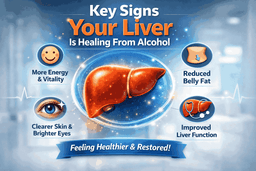
Key Signs Your Liver Is Healing From Alcohol
The indications that your liver is mending after alcohol consumption often emerge slowly, and they aren’t always easy to spot right away. As the liver starts to heal, you’ll notice benefits rippling through various bodily systems, a testament to its vital functions in metabolism, detoxification, and general well-being. These improvements can be seen in physical, biochemical, and functional aspects, and they usually develop gradually.
Recognizing these indicators can be reassuring, providing confirmation that healing is underway and aiding individuals in understanding their body’s responses post-alcohol cessation.
Improved Energy and Reduced Fatigue
Fatigue often appears as a clinical sign of liver problems, arising from disrupted metabolic processes and the buildup of harmful substances. As the liver mends, its capacity to process various compounds rebounds, leading to a gradual but noticeable increase in energy. As a result, patients often report less daytime tiredness and a better ability to continue their usual activities.
Better Digestive Function
The liver is a key player in digestion, primarily by producing bile, a substance crucial for breaking down fats. If your liver’s not working right, you might feel bloated, queasy, or just plain off after a meal. The good news? With the liver’s healing, bile production resumes its normal course. This, in turn, aids digestion and frequently rekindles your appetite. Frequently, this is the initial indication that your liver is on the mend.
Clearer Skin and Healthier Appearance
Skin problems can be a sign of liver disease, often leading to a dull or discolored appearance. Moreover, jaundice, a more serious condition, can develop. As the liver mends, bilirubin levels stabilize, and the skin gradually regains its former vitality, appearing healthier in the process.
Stabilization of Weight
Alcohol consumption interferes with metabolic functions, which can result in changes in body weight. As the body heals, metabolic processes tend to stabilize, which leads to more consistent weight. In addition, improved nutrient absorption contributes to overall health.
Reduced Abdominal Discomfort
Liver inflammation can cause pain in the upper right abdomen. Usually, a decrease in pain is seen as the inflammation lessens, which indicates that the condition is improving.
Improved Mental Clarity
The liver’s main job is to neutralize substances that could harm the brain. Therefore, when the liver’s function is restored, cognitive problems like brain fog and trouble concentrating often lessen. Patients often report improved focus and more stable emotions.
Normalization of Liver Enzymes
Blood tests offer concrete evidence of healing. As the liver cells heal, the levels of enzymes such as ALT and AST slowly diminish.
Patients frequently ask how long it takes for liver enzymes to return to normal. Although some improvement might be seen in a few weeks, a complete recovery usually takes several months.The length of time needed depends on how much the liver has been damaged.
Following these measurable improvements observed in the laboratory, the liver’s return to its functional state triggers a series of more significant physiological changes. The liver’s essential function in regulating hormonal equilibrium, encompassing the metabolism of insulin, cortisol, and sex hormones, contributes to the stabilization of this balance. As a result, people often report more consistent energy, improved mood stability, and less irritability.
Concurrently, the immune system’s effectiveness is enhanced, owing to the liver’s crucial role in immune signaling and the modulation of inflammatory processes. Consequently, individuals may observe a decrease in the incidence of minor health issues, a more rapid recovery from illnesses, and an overall sense of enhanced well-being.
Metabolic regulation undergoes another crucial shift, particularly in the equilibrium of glucose and lipids. Following hepatic recovery, blood glucose concentrations often normalize, and cholesterol levels may also demonstrate a gradual improvement. These widespread changes indicate that the signs of a liver recovering from alcohol use go beyond individual lab results. They suggest a more complete return to internal balance.
These subtle yet significant advancements accumulate over time, fostering improved overall well-being and supporting enduring recovery.
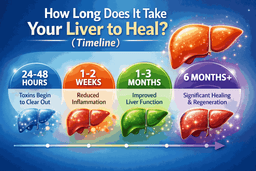
How Long Does It Take Your Liver to Heal? Liver Recovery Timeline
The liver’s recovery time post-alcohol consumption is not a one-size-fits-all situation. It hinges on the extent of the damage, the duration of alcohol use, and the individual’s general well-being. Despite this, certain patterns often appear in the healing process, highlighting the liver’s remarkable ability to regenerate.
Grasping the recovery process is key to making sound predictions and recognizing early signs of progress. Therefore, maintaining sobriety and making lasting lifestyle changes are crucial for the liver’s ability to heal itself.
First Week: What to Expect After 1 Week of No Alcohol
A week after you stop drinking, your liver begins the process of detoxifying, working to eliminate fat and kickstart its recovery. Even though the visible effects are small at first, the body is already making significant biochemical adjustments.
People often find that they sleep better, feel more hydrated, and have a bit more energy. Reaching the one-week mark without alcohol is a significant step toward recovery.
First Month: Early Signs of Healing
Within a month, you’ll likely see a marked reduction in inflammation, and the liver’s fatty changes might start to resolve. Elevated liver enzyme levels are often seen as a sign of good health.
At this point, the positive changes in your liver’s function often become noticeable. You might experience improved digestion and a surge in energy.
Three Months: Liver After 3 Months No Alcohol
After three months, significant recovery is often seen, especially in people with fatty liver disease. Imaging studies might show less fat in the liver, and lab results continue to improve. Three months without a drink, and the liver’s doing a lot better.
Six Months and Beyond: Long-Term Recovery
After a period of abstinence, the liver’s ability to heal continues, slowly returning to a more stable state. As inflammation decreases, the healthy parts of the organ work to repair the damage that happened before.
This stage indicates a lasting recovery, which helps protect the liver’s health.
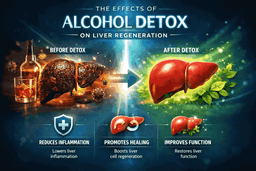
The Effects of Alcohol Detox on Liver Regeneration
Stopping alcohol consumption is one of the most critical steps in allowing the liver to begin repairing itself, but the transition into detox is not only a biological process, it is also a period of significant physiological adjustment. During this period, the body transitions from persistent toxin exposure to a condition that facilitates the more efficient operation of recuperative processes. Without the constant demands of processing alcohol, the liver can then use its resources to reduce inflammation, repair damaged cells, and restore metabolic balance.
How Detoxing Facilitates Liver Healing
Detoxification removes the continuous burden of alcohol metabolism, allowing the liver to redirect its energy toward repair and regeneration. The safest approach often involves a medically supervised alcohol detox, where trained professionals monitor your health, manage withdrawal symptoms, and provide the guidance needed to support a safe and effective recovery.
Signs of Liver Detox Working
Individuals undergoing detoxification frequently observe enhancements in their sleep quality, emotional equilibrium, and overall physical well-being. Digestive disturbances often diminish, and energy levels tend to rise progressively. These observed changes are often seen as signs of the liver’s ability to detoxify itself, which then reflects the broader health benefits of not drinking alcohol.
Participating in treatment for Alcohol Use Disorder, especially in a residential program, can offer additional support and improve the chances of long-term success.

When Is It Time to Seek Medical Help?
Although many aspects of liver recovery occur naturally after stopping alcohol use, some symptoms require immediate medical attention. Persistent jaundice, along with severe abdominal pain, swelling in the abdomen or legs, and confusion, could indicate serious liver disease or related problems, necessitating medical intervention.
Moreover, people experiencing withdrawal symptoms, such as tremors (commonly known as alcohol shakes), should seek medical help. Without proper medical care, withdrawal can be dangerous.
If you or a loved one are experiencing withdrawal, you don’t have to face it alone. The House of Life, a luxury rehab in Los Angeles, offers 24/7 residential inpatient treatment for alcohol and drug addiction, including medically supervised detox, counseling (individual, group, and family), and comprehensive support services to help you safely recover and support your liver health.
Signs Your Liver Is Healing From Alcohol: FAQ
How Long Does It Take for the Liver to Regenerate?
What Is High Alt in Blood Test?
How Long Is Alt Elevated After Drinking?
How Long for Liver Enzymes to Go Down?
Can Liver Damage Be Reversed?
What Color Is Poop When the Liver Is Detoxing?
Does the Liver Hurt When Healing?
What Are the Signs That Your Liver Is Detoxing?
Does Drinking Lots of Water Help Your Liver?
References
National Institute on Alcohol Abuse and Alcoholism. (2021). Alcohol’s effects on the body. https://www.niaaa.nih.gov/alcohols-effects-health/alcohols-effects-body
European Association for the Study of the Liver. (2018). EASL clinical practice guidelines: Management of alcohol-related liver disease. Journal of Hepatology, 69(1), 154–181.https://pubmed.ncbi.nlm.nih.gov/29628280/
Rehm, J., & Shield, K. D. (2019). Global burden of alcohol use disorders and alcohol liver disease. Biomedicines, 7(4), 99.https://pubmed.ncbi.nlm.nih.gov/31847084/
Osna, N. A., Donohue, T. M., & Kharbanda, K. K. (2017). Alcoholic liver disease: Pathogenesis and current management. Alcohol Research: Current Reviews, 38(2), 147–161.https://pubmed.ncbi.nlm.nih.gov/28988570/
Teschke, R. (2018). Alcoholic liver disease: Mechanisms and management. World Journal of Gastroenterology, 24(26), 2845–2860. https://pubmed.ncbi.nlm.nih.gov/31491888/
World Health Organization. (2023). Alcohol consumption and liver disease. https://www.who.int
Mellinger, J. L., & Volk, M. L. (2018). Multidisciplinary management of patients with alcohol-related liver disease. Journal of Hepatology, 69(2), 534–542.https://pmc.ncbi.nlm.nih.gov/articles/PMC10500286/


