
Table of Contents
- What Is Fentanyl?
- What Is Oxycodone?
- Fentanyl vs. Oxycodone: Key Differences
- Is Fentanyl Stronger Than Oxycodone?
- Fentanyl vs. Oxycodone: Risks and Side Effects
- Can You Take Fentanyl and Oxycodone Together?
- Fentanyl vs. Oxycodone Overdose: Signs and What to Do
- Treatment for Fentanyl or Oxycodone Addiction in Los Angeles, CA
If you or someone you love is using opioids and you’re worried, you don’t have to figure this out alone. Call +1 805 888 8000 to talk confidentially with our admissions team, 24/7.
When comparing fentanyl vs oxycodone, the most important fact is the gap in strength. Both are opioids, and both can cause addiction and fatal overdose. But fentanyl is roughly 50 to 70 times more potent than oxycodone per milligram, and that gap is a major reason so many overdoses happen. This guide explains how the two drugs differ, why counterfeit pills are so dangerous, and what to do if opioids have become a problem.

What Is Fentanyl?
Fentanyl is a synthetic opioid made entirely in a lab. Pharmaceutical fentanyl is FDA-approved for severe pain, such as during surgery, for cancer patients, or for people already tolerant to other opioids. In clinical settings it comes as patches, lozenges, and injections. Learn more about the medical use of fentanyl.
Fentanyl binds to mu-opioid receptors and reaches the brain extremely fast because it dissolves easily in fat. According to the DEA, it is about 100 times more potent than morphine and 50 times more potent than heroin. That potency is why illicitly manufactured fentanyl now drives so many overdose deaths.

What Is Oxycodone?
Oxycodone is a semi-synthetic opioid made from thebaine, a compound found in the opium poppy. It is prescribed for moderate to severe pain and is usually taken by mouth, either as an immediate-release tablet or as an extended-release formulation absorbed over about 12 hours. It is sold on its own and in combination with acetaminophen as Percocet. See the DEA’s oxycodone fact sheet for more.
Oxycodone also acts on mu-opioid receptors, but more slowly and far less powerfully. The CDC’s conversion factors rate it at 1.5 times the strength of oral morphine.
Is Fentanyl the Same as OxyContin?
No. OxyContin is a brand name for extended-release oxycodone, a completely different drug. Fentanyl is fully synthetic, far more potent, and acts much faster. People often confuse the two because illicit fentanyl is frequently pressed into counterfeit pills made to look like oxycodone products.

Fentanyl vs. Oxycodone: Key Differences
| Fentanyl | Oxycodone | |
| Type | Fully synthetic | Semi-synthetic |
| Potency | ~100x morphine | ~1.5x morphine |
| Onset | Minutes | 15 to 30 minutes orally |
| Common forms | Patches, lozenges, injections (medical); powder and counterfeit pills (illicit) | Tablets, extended-release (OxyContin), combination pills (Percocet) |
| DEA schedule | Schedule II | Schedule II |
Chemistry and Origin
Fentanyl is entirely made up of chemical precursors. Oxycodone is a natural compound from a plant that is chemically altered in a lab. Both are Schedule II controlled substances, which means they have accepted medical uses but a high potential for abuse and dependence.
Oxy vs. Fentanyl: Speed of Onset
In the oxy vs fentanyl comparison, speed matters as much as strength. Fentanyl’s fat solubility lets it cross into the brain within minutes, which suits emergency and surgical care but leaves almost no time to react to a mistake. Oral oxycodone builds more gradually, typically over 15 to 30 minutes.
Forms and Medical Use
Oxycodone is the more common outpatient prescription, taken as tablets for pain after injury or surgery. Fentanyl is reserved for severe or breakthrough pain in controlled settings, delivered by patch, lozenge, or injection. Outside medicine, fentanyl appears as illicit powder and counterfeit pills.

Is Fentanyl Stronger Than Oxycodone?
Yes, by a wide margin. The CDC treats oxycodone as 1.5 times morphine’s strength, while the DEA cites fentanyl at about 100 times morphine’s. Potency comparisons are approximate and vary with the route of use, but the gap is enormous.
How Much Stronger Is Fentanyl Than Oxycodone?
Dividing those figures, how much stronger fentanyl is than oxycodone comes to roughly 50 to 70 times per milligram. In practical terms, a tiny amount of fentanyl can do what a much larger amount of oxycodone does, and the margin between a dose that works and a dose that kills is far narrower.
Why Counterfeit Pills Are So Dangerous
Illicit fentanyl is often pressed into pills that look like real oxycodone. Someone who believes they’re taking a familiar dose may be taking a drug dozens of times stronger, and the pills are not evenly mixed, so one can be far more potent than the next. You cannot tell by looking, and a pill from anywhere other than a pharmacy cannot be trusted.

Fentanyl vs. Oxycodone: Risks and Side Effects
Shared Side Effects
Both drugs can cause nausea, constipation, drowsiness, confusion, and itching. These effects are more common with higher doses and when opioids are new to the body.
Respiratory Depression
This is the most dangerous risk with either drug: breathing slows or stops. Fentanyl can cause it within minutes, leaving little time to respond. Oxycodone carries the same risk, especially at high doses or when mixed with alcohol or sedatives.
Addiction and Dependence
Both carry serious addiction risk. Fentanyl’s speed and intensity make it especially reinforcing, and tolerance and dependence often develop faster than with oxycodone. For more on the drug’s effects on the brain and body, see the National Institute on Drug Abuse.
Withdrawal
Stopping either drug after regular use causes withdrawal: muscle aches, sweating, anxiety, nausea, and intense cravings. If you’re wondering how long fentanyl stays in your system, our guide on how long does fentanyl stay in your system covers detection windows in more detail.

Can You Take Fentanyl and Oxycodone Together?
Not outside strict medical supervision. Taking the two together sharply raises the risk of fatal respiratory depression because their effects stack. The main exception is opioid rotation in palliative care, where clinicians carefully switch a patient from one opioid to another and monitor them closely.
The real-world danger is often unintentional. Someone taking prescription oxycodone may take a counterfeit pill that actually contains fentanyl, or use another drug laced with it, without knowing. Combining either opioid with alcohol, benzodiazepines, or other sedatives adds still more risk.
Fentanyl vs. Oxycodone Overdose: Signs and What to Do
Warning Signs of an Opioid Overdose
- Slow or stopped breathing
- Blue or gray lips and fingertips
- Pinpoint pupils
- Unresponsiveness
- Gurgling or snoring sounds, which can mean a blocked airway
Fentanyl overdoses can also cause chest and jaw stiffness that makes rescue breathing harder, according to the CDC.
What to Do If You Suspect an Overdose
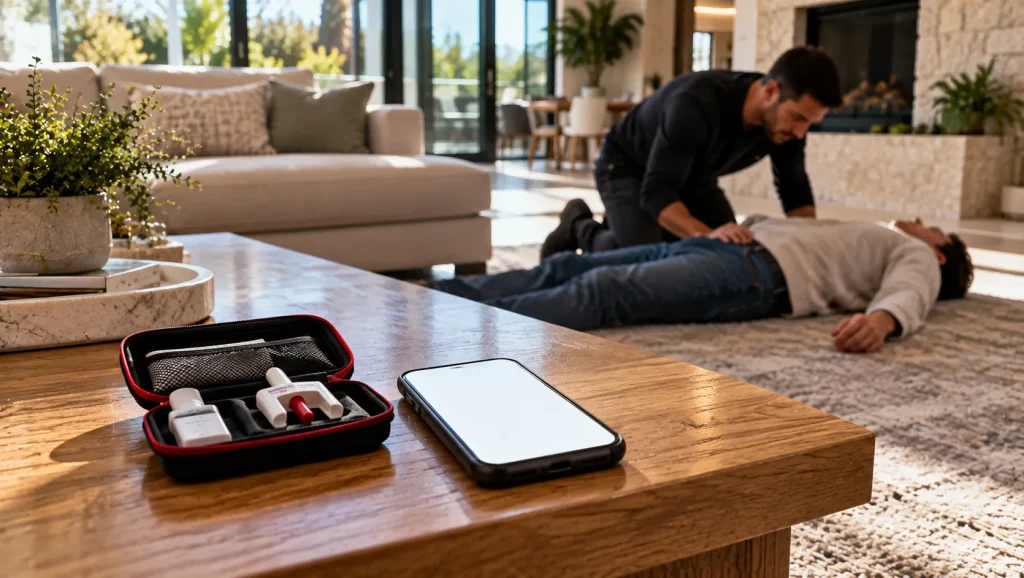
Call 911 immediately and give naloxone if you have it. Naloxone (Narcan) is available over the counter as a nasal spray and needs no training. Because fentanyl is so potent, more than one dose may be needed, per the CDC. Stay with the person until help arrives.

Treatment for Fentanyl or Oxycodone Addiction in Los Angeles, CA
Fentanyl remains a serious problem locally. Los Angeles County recorded 1,135 fentanyl-related overdose deaths in 2025, a 10% decline from the year before but still a heavy toll, according to the LA County Department of Public Health.
At The House of Life, we treat opioid addiction as the medical condition it is, not a failure of willpower, whether fentanyl, oxycodone, or both are involved. For most people, the first step is getting through withdrawal. Opioid withdrawal is rarely life-threatening on its own, but it is intense enough that most people struggle to do it alone. That is why we offer fentanyl detox in Los Angeles under medical supervision, so symptoms are managed safely and comfortably.
Detox is only the beginning. Lasting recovery means treating the addiction itself, and our fentanyl addiction treatment in Los Angeles combines therapy, psychiatric care, and a structured path toward recovery built around the realities of opioid dependence.
When you call, our admissions team will ask a few questions about what substances are involved, how long and how much, and any health concerns. We’ll explain your options, check insurance coverage if you’d like, and help you plan next steps, including timing if you’re ready to start.

Fentanyl vs. Oxycodone: FAQs
What Are the Top 5 Strongest Painkillers?
Why Do Doctors Give Fentanyl Instead of Morphine?
Is Oxycodone Equivalent to Fentanyl?
What Is a Stronger Pain Med Than Oxycodone?
You don’t have to wait for things to get worse. Call +1 805 888 8000 to speak with someone who understands.
References
Centers for Disease Control and Prevention. (n.d.). Fentanyl facts. Retrieved from https://www.cdc.gov/stop-overdose/caring/fentanyl-facts.html
Centers for Disease Control and Prevention. (2021). Oral morphine milligram equivalent (MME) conversion factors. National Center for Injury Prevention and Control. Retrieved from https://www.cdc.gov/opioids/healthcare-professionals/prescribing/calculating-total-daily-dose.html
County of Los Angeles Department of Public Health. (2026, June 25). Drug-related overdose deaths in LA County continue to fall. Retrieved from https://lacounty.gov/2026/06/25/drug-related-overdose-deaths-in-la-county-continue-to-fall/
Drug Enforcement Administration. (n.d.-a). Fentanyl. Retrieved from https://www.dea.gov/factsheets/fentanyl
Drug Enforcement Administration. (n.d.-b). Oxycodone. Retrieved from https://www.dea.gov/factsheets/oxycodone