


Table of Contents
- Factors That Can Impact the Price of Cocaine
- How Much Is an 8 Ball?
- How Many Grams of Coke are in an 8 Ball?
- Legal Consequences of Cocaine Possession
- Who’s Selling? The Role of Drug Dealers
- What Are the Side Effects and Risks of an 8 Ball of Cocaine?
- Treatment Options for Cocaine Addiction at The House of Life
Drug slang is designed to be discreet, often turning clinical measurements or legal weights into casual shorthand. The “8 ball” is perhaps the most enduring example. It’s a term that strips away the gravity of what is actually being handled, replacing a specific weight of cocaine with a phrase borrowed from a billiard table.
But for those dealing with the reality of substance use, whether as a clinician, a family member, or a user, that 3.5-gram measurement represents a significant threshold. Recognizing the weight, cost, and physical impact of an 8 ball of cocaine isn’t just about decoding jargon; it’s about recognizing the point where the physical and financial demands of a habit often move from experimentation into a far more consuming cycle.

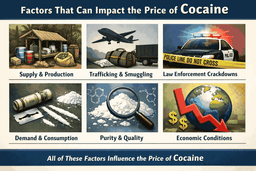
Factors That Can Impact the Price of Cocaine
If you were to ask people in different parts of the country “how much is an 8 ball,” you would get a wide range of answers. Because cocaine exists in an unregulated, shadow economy, its price is governed by a volatile mix of logistics, “purity politics,” and simple geography.
There is no MSRP on the street; instead, a complex web of supply chain factors dictates the final cost to the consumer:
Geography and Logistics: The Distance Tax
Cocaine is almost exclusively an imported product, originating in the Andean regions of South America. The journey from a jungle laboratory to a street corner in a U.S. city is a gauntlet of risk. Every border crossed and every hand-off between cartels and regional distributors adds a layer of cost.
This creates what is often referred to as a “distance tax.” In “gateway” cities like Miami, Houston, or San Diego, prices remain relatively low. However, as the product moves into the interior, reaching rural communities in the Midwest or remote areas of New England—the price inflates to account for the increased risk and transportation overhead.

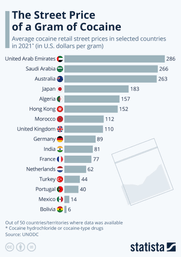
Purity and Cutting Agents
In a legitimate market, price reflects quality. In the illicit trade, purity is rarely guaranteed. Dealers frequently “cut” or dilute the product to stretch their inventory. They may use a process called “re-rocking,” where powdered cocaine is mixed with fillers and compressed to look like high-purity “rock” from the source.
Common additives include:
- Inert Fillers: Cornstarch, vitamin B12, or baby powder to add weight.
- Active Mimics: Caffeine, lidocaine, or benzocaine to replicate the “rush” or the numbing sensation users associate with quality.
- The Fentanyl Variable: The most terrifying trend in modern drug markets is the presence of fentanyl. Because dealers often handle multiple substances on the same surfaces, cross-contamination is a pervasive threat. For a person with no opioid tolerance, an 8 ball contaminated with even a few milligrams of fentanyl can lead to fatal respiratory arrest.
How Much Is an 8 Ball?
When someone asks “what is an 8 ball,” they are usually looking for the “bulk rate” of cocaine. In the illicit market, buying 3.5 grams is generally more cost-effective than buying individual grams. It is often the point where a user transitions from buying a single evening’s supply to stocking up for a prolonged period of use.
What is the Street Price of an 8 Ball of Cocaine?
While prices are never set in stone, the general range in the United States currently sits between $150 and $350.
- Metropolitan Hubs: In cities with high competition among sellers, an 8 ball might go for $150 to $200.
- Suburban and Rural Areas: In regions where the supply is thinner and the risk for the dealer is higher, the price can easily spike to $350 or $400.
However, looking at the price tag alone is deceptive. The real “price” of an 8 ball cocaine includes the invisible, long-term costs: the rapid depletion of savings, loss of productivity, and eventually, the medical expenses associated with cardiovascular damage.
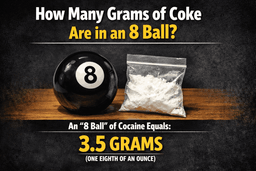
How Many Grams of Coke are in an 8 Ball?
The term 8 ball drug slang is a literal reference to weight: it is exactly one-eighth (1/8) of an ounce. To understand how many grams in an eight ball, we look at the standard ounce, which is approximately 28.35 grams.
- 28.35 ÷ 8 = 3.54 grams.
In the street market, this is almost always rounded down to 3.5 grams. For context, a standard “line” of cocaine is roughly 0.05 to 0.1 grams. This means a single 8 ball contains anywhere from 35 to 70 individual doses. When an individual begins purchasing by the 8 ball, it is a clear clinical indicator that their tolerance has increased, requiring significantly more of the drug to achieve the same dopamine spike they once received from a single gram.
Visually, how big is an 8 ball of cocaine? It is much smaller than its namesake. 3.5 grams of dense powder is roughly the size of a large walnut. It typically arrives in a small, 2×2 inch plastic jewelry bag. Its small size allows a significant addiction to remain “hidden in plain sight” from family members and employers.
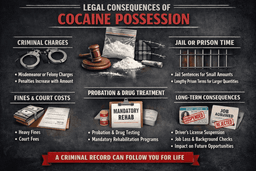
Legal Consequences of Cocaine Possession
The legal system does not view an 8 ball as a recreational amount. Under the Controlled Substances Act, cocaine is a Schedule II drug, indicating a high potential for abuse and severe dependence.
Possessing 3.5 grams puts an individual in a dangerous legal category. While some areas have moved toward decriminalization for microscopic amounts, 3.5 grams is often the threshold where a charge can be escalated from “simple possession” to “possession with intent to distribute.” If police find digital scales or multiple small baggies, felony charges follow, potentially leading to multi-year prison sentences and a permanent criminal record.
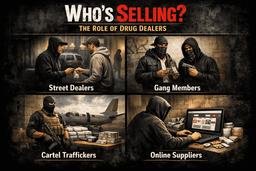
Who’s Selling? The Role of Drug Dealers
The distribution network for cocaine is rarely a direct line. The person selling an 8 ball is typically a street-level or mid-tier dealer. These individuals are rarely chemists and have zero incentive to ensure safety.
In this unregulated environment, the “dealer-user” relationship is fundamentally predatory. The dealer relies on the user’s chemical dependency for income, while the user relies on a product that is increasingly contaminated. There is no quality control and no recourse for a buyer who receives a “short” bag or a product laced with lethal synthetic opioids.
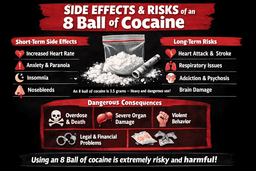
What Are the Side Effects and Risks of an 8 Ball of Cocaine?
Consuming an 8 ball, especially over a “bender,” forces the central nervous system into a state of “Adrenergic Storm.” It is a massive physical insult to the body.
Cardiovascular Destruction
Cocaine is uniquely cardiotoxic. It increases the heart’s demand for oxygen while simultaneously constricting the coronary arteries that supply it. This “clamping down,” combined with a skyrocketing heart rate, is a recipe for heart attack and stroke, even in young users with no prior medical history.
Neurological Impact and Anhedonia
The brain’s reward system cannot handle the dopamine flood triggered by 3.5 grams of cocaine. Over time, the brain’s receptors shut down to protect themselves. This leads to anhedonia, where the individual becomes incapable of feeling pleasure from natural activities like food or social interaction. The only thing that provides relief is more cocaine, creating a devastating cycle.
The Danger of Cocaethylene
Many people use an 8 ball while drinking alcohol. This creates a metabolic byproduct in the liver called cocaethylene. This substance is significantly more toxic to the heart than cocaine or alcohol alone and stays in the system much longer, increasing the risk of sudden cardiac arrest hours after the “high” has dissipated.
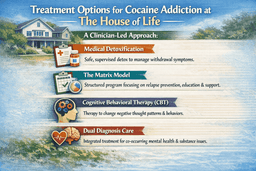
Treatment Options for Cocaine Addiction at The House of Life
If you’ve found yourself searching for the price or weight of an 8 ball, the drug has likely already begun to take a central role in your life. At The House of Life, we look past the jargon to treat the underlying neurobiology of addiction. We believe recovery is a medical process, not a test of character.
A Clinician-Led Approach:
- Medical Detoxification: After a cocaine binge, the “crash” is a time of deep despair and strong cravings. Our professional staff makes sure that you are safe while you go through this withdrawal through safe cocaine detox.
- The Matrix Model:The Matrix Model is an organised treatment plan made especially for people who are addicted to stimulants. It includes therapy for the person and education for the family.
- Cognitive Behavioral Therapy (CBT): We help patients identify the “cues”—the stressors or environments, that trigger the urge to call a dealer.
- Dual Diagnosis Care: We treat co-occurring disorders like untreated ADHD, depression, or trauma simultaneously to ensure a foundation for long-term sobriety.
8 Ball of Cocaine: FAQ
What Does Having an 8-Ball Mean?
What Does It Mean When Someone Says They Want an 8-Ball?
What Does an 8-Ball Tattoo Mean in Drugs?
What Is the 100 1 Rule for Cocaine?
Reference
Armstrong, M. (2019, June 26). Cocaine retail street prices in selected countries [Infographic]. Statista. https://www.statista.com/chart/18527/cocaine-retail-steet-prices-in-selected-countries/
United Nations Office on Drugs and Crime. (2004). Coca / Cocaine market (Chapter 5). In World Drug Report 2004 (pp. 105–142). https://www.unodc.org/pdf/WDR_2004/Chap5_coca.pdf


