


Table of Contents
- What Is Alcoholism (Alcohol Use Disorder)?
- How Does Addiction Develop in the Brain?
- Stage 1: The Pre-Alcoholic Phase (Early Stage)
- Stage 2: Early-Stage Alcoholism (The Transitional Phase)
- Stage 3: Middle-Stage Alcoholism (The Crucial Phase)
- Stage 4: End-Stage Alcoholism (The Chronic Phase)
- How Alcoholism Is Diagnosed
- Treatment Options for Alcoholism at The House of Life
- Can Alcoholism Be Reversed at Any Stage?
- When to Seek Help for Alcohol Addiction
- Tips for Supporting a Loved One Through Alcoholism
Alcoholism, clinically referred to as Alcohol Use Disorder (AUD), is rarely an overnight occurrence. People with this disease often start slowly, by doing something that is just socially acceptable or a way to “unwind” after a long day. However, if nothing is done, it can go through different stages that can end in very bad physical and mental effects.
Understanding the 4 stages of alcoholism is vital for early detection and recovery. Whether you are concerned about your own habits or those of a loved one, recognizing these signs can be the difference between a manageable habit and a life-threatening addiction.
What Is Alcoholism (Alcohol Use Disorder)?
Alcoholism is a chronic relapsing brain disease characterized by an impaired ability to stop or control alcohol use despite adverse social, occupational, or health consequences. The medical community uses the term Alcohol Use Disorder (AUD) to reflect that this condition exists on a spectrum, ranging from mild to severe.
AUD is diagnosed based on specific criteria, such as an inability to cut down, experiencing withdrawal symptoms, and spending a significant amount of time obtaining or recovering from alcohol. It is not a lack of willpower; it is a clinical condition that requires professional alcohol addiction treatment to manage effectively.
How Does Addiction Develop in the Brain?
To understand the levels of alcoholism, we must look at the brain. Alcohol is a central nervous system depressant that interferes with the brain’s communication pathways. A rush of dopamine happens in the brain’s reward center when you drink. The brain gets used to these spikes over time by making less of its own dopamine. This leads to a “deficit,” where the person doesn’t feel “normal” or happy without drinking.
Furthermore, chronic drinking affects the prefrontal cortex (responsible for decision-making) and the amygdala (responsible for stress and emotions). This neurobiological shift explains why willpower alone is often insufficient to stop drinking; the brain has been rewired to prioritize alcohol for survival.

Stage 1: The Pre-Alcoholic Phase (Early Stage)
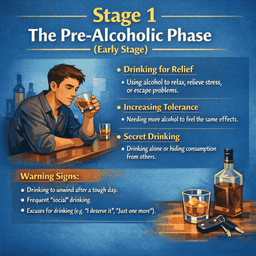
The first stage is often the hardest to identify because it looks like “normal” social behavior. In this phase, there is little to no visible “loss of control.”
Signs and Symptoms:
- Drinking to Cope: Instead of drinking for celebration, the individual drinks to dull anxiety, stress, or boredom.
- Increased Tolerance: The person begins to need more alcohol to achieve the same “buzz” they once got from one or two drinks.
In the pre-alcoholic stage, the person may still excel at work and maintain healthy relationships. However, the psychological dependence is quietly taking root.
Stage 2: Early-Stage Alcoholism (The Transitional Phase)
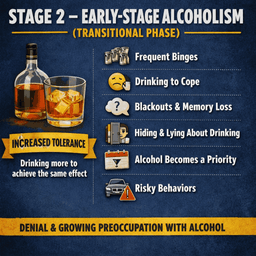
In the second stage, the transition from “heavy drinking” to “alcoholism” becomes clearer. This stage is marked by an increasing preoccupation with the next drink.
Why Do I Black Out When I Drink?
One of the hallmark signs of Stage 2 is the occurrence of blackouts. Many people ask, “Why do I black out when I drink?” A blackout isn’t the same as passing out. It is a period of alcohol-induced amnesia where the person is awake and functioning but the brain, specifically the hippocampus, stops recording new memories.
Does alcohol affect memory? Absolutely. Chronic blackouts are a major red flag that the brain is being overwhelmed by toxic levels of ethanol. Risk factors for blackouts include drinking on an empty stomach, which causes Blood Alcohol Content (BAC) to spike rapidly, overwhelming the brain’s ability to create memories.
Signs and Symptoms:
- Urgency for the First Drink: Needing a drink immediately upon arriving home or at an event.
- Guilt and Denial: Feeling uneasy about their drinking habits but dismissing concerns from others.
Stage 3: Middle-Stage Alcoholism (The Crucial Phase)
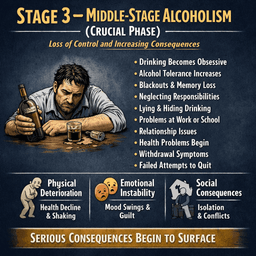
By the third stage, the individual has lost the power of choice. Alcohol is no longer a “want”; it is a “need.” This is the point where life usually begins to unravel visibly.
Why Do Alcoholics Shake?
At this level, physical dependence is undeniable. You may notice tremors or “the shakes,” particularly in the morning. Shaking happens because the brain has become accustomed to the sedative effects of alcohol. When the blood alcohol level drops, the nervous system becomes overactive (hyper-excitable), leading to tremors, sweating, and agitation. This is a clear sign of physical withdrawal. If you are experiencing shaking after drinking alcohol, it is a clinical sign that your body is entering withdrawal.
Signs and Symptoms:
- Loss of Control: An intention to have “just one” inevitably leads to a binge.
- Failed Responsibilities: Missing work, neglecting children, or forgetting financial obligations.
- Change in Friend Groups: Dropping old friends who don’t drink in favor of “drinking buddies.”
- Irritability and Aggression: Becoming defensive or hostile when the subject of alcohol is raised.
Stage 4: End-Stage Alcoholism (The Chronic Phase)
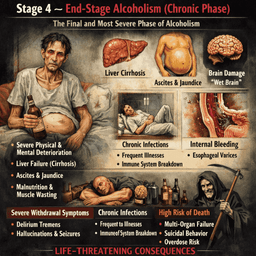
End-stage alcoholism is a medical emergency. At this point, the individual’s life revolves entirely around alcohol. The body is beginning to fail, and the psychological obsession is total.
Signs and Symptoms:
- Chronic Intoxication: The person may be drunk for days or weeks at a time.
- Wernicke-Korsakoff Syndrome: Also known as “wet brain,” this is a permanent cognitive impairment caused by a lack of Vitamin B1 (thiamine).
- Liver Disease: Signs like jaundice (yellowing of the skin/eyes), cirrhosis, and abdominal swelling.
- Ethical Breakdown: The individual may resort to stealing or extreme lying to sustain their habit.
Without professional medical intervention, Stage 4 is often fatal due to liver failure, heart disease, or suicide.

How Alcoholism Is Diagnosed
Doctors and addiction specialists use a clinical assessment to determine the severity of AUD. You might be asked:
- Have you tried to cut back but couldn’t?
- Do you experience cravings?
- Has your drinking interfered with your job or family?
- Do you continue to drink even though it makes you depressed or anxious?
A diagnosis of Mild (2-3 symptoms), Moderate (4-5 symptoms), or Severe (6 or more symptoms) helps guide the treatment plan.
Treatment Options for Alcoholism at The House of Life
Recovery is a journey, not a destination. At The House of Life, we believe in a holistic, evidence-based approach to healing the “whole person”, mind, body, and spirit.
Our treatment options includes:
- Medically Supervised Detox: The most dangerous part of recovery is the initial withdrawal. We provide 24/7 medical oversight to ensure safety and comfort.
- Cognitive Behavioral Therapy (CBT): Identifying the triggers and “why” behind the drinking.
- Dual Diagnosis: Treating underlying issues like depression, PTSD, or anxiety that often fuel addiction.
- Nutritional Restoration: Repairing the damage alcohol has done to the gut and brain through targeted nutrition.
- Aftercare Planning: Establishing a “stages of sobriety” roadmap to prevent relapse.

Can Alcoholism Be Reversed at Any Stage?
The short answer is yes, but with caveats. While the brain and body have remarkable healing powers, some damage (like advanced cirrhosis or “wet brain”) may be permanent.
However, the alcohol recovery timeline shows that:
- 72 hours: Physical withdrawal signs are at their worst and start to get better.
- 2 Weeks: Your sleep habits start to return to normal, and the brain fog goes away.
- 3-6 Months: As dopamine receptors start to heal, it gets easier to control your emotions.
After one year, the chance of relapse goes down a lot, and liver enzyme levels usually go back to normal.
There is always time to stop the damage and start the path to health.

When to Seek Help for Alcohol Addiction
You do not need to hit “rock bottom” to seek help. If you find yourself thinking about alcohol more than you’d like, or if you are searching for “why do I black out when I drink,” the time to act is now. Early intervention in Stage 1 or 2 is significantly more successful than waiting until Stage 4.
Red flags that require immediate help:
- Drinking alone or in the morning.
- Experiencing withdrawal symptoms (shaking, sweating) when not drinking.
- Legal issues (DUIs) or job loss.
- Inability to imagine a life without alcohol.
Tips for Supporting a Loved One Through Alcoholism
Supporting an alcoholic is a delicate balance of compassion and boundaries.
- Supporting an alcoholic is a delicate balance of compassion and boundaries.
- Educate Yourself: Understand the stages of alcohol recovery so you know what to expect.
- Stop Enabling: Do not make excuses for them, pay their legal fees, or hide their bottles. Enabling allows the disease to progress.
- Choose the Right Moment: Speak to them when they are sober and you are calm. Use “I” statements: “I feel scared when you drink to the point of blacking out.”
- Offer a Solution: Have the contact information for a center like The House of Life ready.
- Practice Self-Care: Join support groups like Al-Anon to protect your own mental health.
4 Stages of Alcoholism: FAQ
What Are the 4 Stages of Alcoholism?
What Is the Difference Between Alcoholic and Heavy Drinker?
What Are the Four C’s of Alcoholism?
If you or a loved one is struggling, contact The House of Life today to speak with a compassionate specialist about the first steps of your recovery.
References
National Institute on Alcohol Abuse and Alcoholism. (2022).[2][3][4] Alcohol use disorder: Risk, diagnosis, and recovery. https://www.niaaa.nih.gov/health-professionals-communities/core-resource-on-alcohol/alcohol-use-disorder-risk-diagnosis-recovery#pub-toc0


